Taxing Multinational Corporations Against Global Catastrophic Risks

Human beings have a very limited attention span, a fact amplified a thousand fold by modern media. It seems the “news” can consist of a only handful of widely followed stories at a time, and only one truly complex narrative. This is a shame because the recent breaking of one substantial news story was followed by the breaking of another one which knocked it out of the field of our electronic tunnel vision. Without some narrative connecting the two only one can really hold our attention at a time. Neither of these stories have to do with Kate Middleton and the birth of Prince George.

Back in late May revelations of Apple dodging tens of billions in taxes from the US broke unto the news. Revelations which were quickly followed up by congressional hearings. But then, right on its heels, came the revelations of Edward Snowden about very questionable surveillance techniques of the NSA. The Snowden leaks did not so much spark as spread a desperately needed debate over the growing capacity of the American security state to tap the open design and marketing of the Internet as the medium for a new “transparent society” as a means to its own ends. Snowden turbocharged a debate we need to be having, and we need to keep alive however short our attention spans.

It is unfortunate, though, that the Snowden revelations managed to push the story of Apple’s and other corporations tax dodging- and especially that of other tech giants such as Google and Amazon off of the front page. For, in many ways that story is just as important a story as the Snowden leaks, and despite appearances, is in some ways connected to them.

As a reminder of what happened at Apple, here is a description from one of those “anti-capitalist” over at Forbes Magazine . Lee Shepard reports that after Apple had set up what were in effect a series of shell companies in Ireland where:

“….60% of Apple’s profits, are routed through these Irish subsidiaries and taxed nowhere. “

“….the holding company pays no tax to any government, and has not paid tax for five years. It claims tax residence nowhere.”

When the story first broke I thought Apple’s efforts at tax evasion were out of the ordinary. I was wrong. What Apple was doing is not just widespread- it was representative of the way global capitalism in the 21st century worked. Since at least the 1990’s corporations had in fact become organizations no longer anchored to territorial states. What this meant was that multi-nationals of all sorts were able to escape effective taxation anywhere. The Tax Justice Network ,  calculates that tax evasion through the establishment of havens and fancy financial accounting costs the world’s states roughly 3 trillion dollars per year or around 5% of global GDP in lost revenue.

Some of the most egregious tax avoiders are tech companies we all know and love. Google’s motto might be “Don’t be evil”, but one wonders how much food or medicine its 2 billion of avoided taxes a year might have bought.  What is particularly rankling here is that we have come to associate a certain social consciousness to Silicon Valley companies we no doubt do not link to other types of multinationals such as Oil Companies. The very same people who lecture us at TED about new projects to save the world, along with the people who applaud them in the audience, are often the very individuals people starving government services for cash as part or at the head of globe straddling multinationals.

Yet the nation-states bereft of the funding they need to function seem to be turning against this massive tax avoidance with a vengeance.  The G20 charged the OECD with writing and issuing a report that calls for coordinated efforts by states to recapture a good deal of this missing revenue. President Obama’s recent proposal of a “grand bargain” with the GOP on taxes called for the lowering of corporate rates to be offset by the closure of loopholes that allow corporations to avoid taxes nearly all together.

Whatever their seriousness in dealing with tax evasion the development of coordinated rules between the leading economies is likely to take years and be beset by wrangling, distortion through corporate lobbying and attempts at arbitrage. Trying to tie the revenues of what truly are global corporations to some particular state or divide such taxable revenues proportionally between different sets of states is bound to be messy, complicated, and to take a long time.

Such re-nationalization of taxation would constitute a step backwards for globalization. Yet the digerati of TED and the global elite of Davos are right about this- many of our problems are global in scope and require global solutions. As I have suggested elsewhere what we need is a truly global tax a means of investing not in the nation-state, as important as it remains, but in the well being of the world as a whole.

Some Christian denominations promote the idea of a tithe where 10% of one’s income should be given to charity. A similar 10% tithe on the missing revenues of global corporations would give us 300 billion in revenue we could invest in the state of our shared world. What follows then are some suggestions on where we could spend this windfall.

Prevention and Response to Pandemic Disease:

Much about early 21st century life might suggest that humanity has finally “conquered nature” and that the largest threats to civilization stem from we ourselves. We should not, however, count the threat from nature out. The largest potential killer in the near future is probably pandemic disease. How big of a threat? The World Bank states it this way:

Because a novel flu virus could infect 30-40% of all people, in a worst-case scenario, business and consumer confidence would plummet, worker absenteeism would rise sharply, and public services would falter, says Olga Jonas, economic adviser for the World Bank health team. “Disruptions would propagate across economies and could include breakdowns of food distribution and public order in megacities,” she says.

A severe flu pandemic could cost 4.8% of global GDP, or more than $3 trillion—and it would hit the poor the hardest. The risk is rising because livestock and human densities increase alongside weak veterinary and public health systems in developing countries.

Globalization and an explosion of urbanization make ideal vectors for killer flus or other forms of devastating communicable diseases. Most of these diseases are zoonotic, that is they emerge out of animals especially those human beings have close contact with due to their being raised for food. Preventing the emergence and spread of these diseases will therefore require the introduction of higher standards of sanitation. It will also require the improvement of public health systems in the developing world. The cost? Again, according to the World Bank:

To this end, veterinary and human health systems in developing countries will require $3.4 billion annually, compared with less than $450 million currently.  A Bank report  argues that this sustained level of investment is justified in view of at least $37 billion in annual expected benefits from prevented pandemics and other major outbreaks.

Let’s just round it to 3 billion 1% of our 300 billion dollar global tithe.

 Avoiding Impacts from the Sky:

We all know about the “big-one” that slammed into earth 65 million years ago killing the dinosaurs along with 70% of the life on earth. In terms of probability, however, we should be just as worried about impacts such as the Tunguska Event an asteroid impact which flattened around 2,000 square kilometers of forest in Siberia in 1908. According to a 2008 report by the Association of Space Explorers, Tunguska scale impacts occur roughly 3 times every thousand years.

A future asteroid collision could have disastrous effects on our interconnected human society. The blast, fires, and atmospheric dust produced could cause the collapse of regional agriculture,leading to widespread famine. Ocean impacts like the Eltanin event (2.5 million years ago) produce tsunamis which devastate continental coastlines.

The impact of a Tunguska size asteroid on a major world urban area or in the oceans near it would be akin to the explosion of 500 Hiroshima sized atomic bombs and/or could set off devastating tsunamis of which we have become in recent years all too familiar.

The main problem when dealing with asteroid impacts isn’t so much dispatching with them once found (really deflecting) as it is finding them in the first place. To this end, former NASA astronaut Ed Lu established the B612 Foundation, a private company that hopes to launch a satellite called Sentinel in 2018 which will look for near earth asteroids.

Lu is to be highly commended for this initiative, yet the question needs to be asked why isn’t NASA or the ESA or some other combination of national space agencies doing this on a scale commensurate with the threat?  B612’s answer is that:

NASA lacks the funding for a mission to find and track the million asteroids that threaten our planet. Because of the ongoing federal budget situation, there is no realistic prospect for those funds to materialize.

B612 estimates the cost over the 12 year planned life of Sentinel to run on the order of 450 million dollars. NASA itself does have an asteroid detection program that costs 20 million per year and the Obama administration awakened to the threat posed by near earth asteroids by the spectacular explosion of one such asteroid over Russia earlier this year proposes to double amount for FY 2014. In other words, the budget of B612, an organization funded through charitable donations is equivalent to the allocation for the same vitally important endeavor as that of the richest country on earth with the most sophisticated and well funded space organization of all time.

NASA’s well known budget woes are merely symptomatic of an American government crushed between rising entitlement costs, a massively bloated security architecture, and the sheer inability to raise revenues to meet these expenses. What suffers as a consequence are all the other vital things a government is supposed to do which in the US context is labeled with the misnomer “discretionary spending”. Related to the prior issue of climate change the essential tools and abilities of earth sciences, not just at NASA but at related agencies such as NOAA, are being steadily eroded by budgetary constraints.

This is no stain whatsoever on Lu, who is filling a vital gap left by our problems funding government, but the lost annual tax revenue of the company where he worked after leaving NASA from 2007-2010, Google, the aforementioned 2 billion dollars, could fund launching and supporting 4 of B612’S Sentinels.

Let’s imagine that we use the equivalent of Google’s avoided taxes out of our global tithe to quadruple the size of the Sentinel project giving us 2 billion to avoid asteroid induced armageddon or the destruction of a major city with all of the death and destruction that would cost. It’s a bargain.

Preparing for Climate Change including Geo-engineering research

There is growing realization that we have passed the point at which we can stop our production of atmospheric carbon dioxide raising the earth’s temperature by 2 degrees celsius (3.6 degrees fahrenheit) before the end of the century. How destructive this rise in temperature will ultimately be we can’t be sure, but it would be smart of us to put aside funds to hedge against worse case scenarios, and start doing major research into geoengineering should we confront Venus style runaway warming.

One thing we need to fund is more research on geoengineering. Many environmentalist do not want us to go there, all of us should not want us to go there, but in the case the effects of rising temperature threaten the lives of billions of people or even civilization itself, we need to have a better grasp of the possibilities. China has declared geoengineering to be a major research focus. During the 2009-2010 FY the Obama administration received requests for 2 billion dollars towards geoengineering research of which it awarded 100 million. The most dangerous scenario would be for a country suffering desperately under the impact of climate change to unilaterally decide to geoengineer the climate to a lower temperature without any international scientific consensus on if and how this should be done.

With our global tithe the world could easily quadruple the amount requested for geoengineering research in the US. Part of that 8 billion could be used to fund international entities charged with coming up with clear red lines where geoengineering should be used and what kind.

Something else we need to be prepared for is widespread displacement whether from sea level rise swallowing low lying areas or desertification. Estimates of just how many refugees will emerge from the impact of climate change are wide indeed- anywhere from 250 million to 1 billion people. Both numbers are incredibly scary.

Systems need to be put in place to help nation- states deal with population flows on a scale never seen before, especially scenarios where sea level rise consumes low lying heavily populated countries such as Bangladesh. The UN agency charged to deal with both refugee flows and disaster response is the UNHCR. It is the first line of defence  poor countries responding to increasingly frequent and more devastating natural disasters. As of 2013 its budget was $87 million.  In 2013 there are roughly 44 million refugees. Even if we stick to the low estimate of 250 million eventual refugees from climate change that would mean 5 times more internally and externally displaced persons than there are today. We should therefore bulk up the UNHCR to five times its current size to prepare meaning that its portion of our global tithe should be around $450 million dollars.

A Second Green Revolution:

The overall rate of population growth may have slowed but projections that we will hit 9 billion before the end of the century still hold. The problem we are facing is that we have no idea how we will feed so many people. The Food and Agricultural Organization of the United Nations estimates that food production between the early 2000’s and 2050 will have to grow by 70% and developing country production to double by 2050 to keep pace with population growth.

The last time we had Malthusian warnings of mass hunger, back in the late 1960’s we were saved by a revolution in agricultural production that goes by the name The Green Revolution. This revolution in agricultural production is credited with saving a billion human beings from starvation and worked by applying mass production methods to food production, using synthetic fertilizers, the development of higher yielding varieties of staple crops and the application of intensive irrigation.

The problem is the Green Revolution appears to have petered out. Growth in yields near 3% in the 1970’s have declined to almost half of that now. It seems we’ve rung all we can from this industrialized model of agriculture. As the World Resource institute puts it:

…most high-quality agricultural land is already in production, and the environmental costs of converting remaining forest, grassland, and wetland habitats to cropland are well recognized. Even if such lands were converted to agricultural uses, much of the remaining soil is less productive and more fragile; thus, its contribution to future world food production would likely be limited. The marginal benefit of converting new land increases the importance of continuing to improve crop yields so the existing agricultural lands can produce additional food.

Some things we could do about this looming crisis of food scarcity according to Alex Evans from the Center for International Cooperation at New York University they would include among others:

Devote more money to agriculture:

“The last twenty years have seen a disastrous decline in the proportion of foreign aid that goes to agriculture, from 17 per cent in 1980 to 3 per cent in 2006.  Total aid spending on agriculture fell 58 percent in real terms over the same period.  Today, developed country donors urgently need to reverse this trend, and to start plugging the gap left by years of under-investment.”

 Devote more public research money to agriculture:

… the budget of the Consultative Group on International Agricultural Research has fallen by 50 per cent over the last 15 years, for example.

Such monies could be used to rapidly deploy potentially game changing technologies such genetically engineering major food to take nitrogen from the air which might end our destructive reliance on synthetic fertilizers.

Create an IEA for food:

A global system of food reserves need not entail the creation of a new agency, but to be credible the system would need to be overseen by a disinterested party, such as the World Food Programme.  It would also be essential to be clear that the role of any system of reserves would be limited to emergency assistance: not to act as a price support for producers, or a permanent system for managing food aid.

How much would those things cost? I have no idea. Let’s take as our ball park figure the combined amount the US and the EU now spend on highly distorting agricultural subsidies. For the US that’s about 20 billion for the EU it’s around 50 billion. Taking away a 70 billion dollar slice of our initial 300 billion tithe.

Nuclear Disarmament

The idea of ridding the world of nuclear weapons may seem utopian, but many of those who think the goal both attainable and necessary are some of the hardest of  realists around. The contemporary movement to ban nuclear weapons got its start with an article in the Wall Street Journal back in 2007. “A World Free of Nuclear Weapons” was written by former Secretary of State in the Reagan administration, George Schultz, and signed by none other than Henry Kissinger. Since then we’ve had Global Zero an international movement whose aim is to rid these apocalyptic weapons from the earth. Global Zero has a four phased plan that gets us to zero nuclear weapons by the 2030s. This would be an incredible way to mark the centenary of the Second World War which gave us these weapons in the first place.

How much would it cost? Probably around 2 billion per year. As always, let’s just double that cost and say that the program runs from now until the centenary of the nuclear attacks on Hiroshima and Nagasaki- 2045.

At 4 billion per year for 32 years that’s about 128 billion from our tithe.

Universal Primary and Secondary Education

If we are ever to achieve the world set forth in the Universal Declarations of Rights we will need to ensure that education is available for all. This is Article 26 of the Declaration, but is also the keystone upon which all other parts of the Declaration rest- the means for the full development of every human personality. While the spread of primary and secondary education has been great over the last few decades, many, especially girls, remain locked out of its benefits.

How much would it cost to ensure that primary and secondary education were available to all? Right now the developing world spends about 82 billion on education at this level.

A high end estimate for how much making free primary and secondary education universal is 35 billion additional dollars. Let’s just double the 82 billion now spent and throw in a few extra billion for could measure- 88.5 billion the remainder of our global tithe.

To review the numbers:

3.0 billion Pandemic diseases

2.0 billion Asteroid Impacts

8 billion Geoengineering Research

500 million UNHCR

70 billion Next Green Revolution

128 billion Nuclear Disarmament

88.5 billion primary and secondary education for all

300 billion

With a mere 10% of the lost taxes from global corporations we have protected ourselves against pandemic diseases and asteroid impacts, created an insurance policy against climate change, done something to address the risk of global famine, eliminated nuclear weapons and provided free primary and secondary education to everyone in the developing world. In the process we have achieved or come far closer to achieving  at least 3 of the 8 Millenium Development Goals. Not bad at all.

Of course, this is not meant to be an absolutely serious proposal but an exercise to show that we do indeed have the resources to address many of the most pressing of our global problems- we just need to get our priorities straight. And this brings me back to where I began- the Snowden leaks whose gorey details just keep on coming.

What the Snowden leaks revealed is that however much the members of global corporations talk the talk of world citizenship they remain subjects of the nation-states from which they stem. The recognition of this fact threatens the most positive elements the globalization of the economy has brought us, namely an increased awareness of our global interconnection and interdependence and hence our global responsibility. The combined facts that techno-elites are simultaneously acting as a tool of the US security state, avoided paying taxes anywhere in the world, and touting “techno- philanthropy” as the main route to solving the world’s problems leaves one in a state of ethical vertigo from which it is difficult to get one’s bearings.

What seems clear to me, however, is that if the positive elements of globalization are to survive, then the elites whose capital is increasingly likely to be sucked up by the nation-states better find a way to make sure a good slice of this capital is used to address the kinds of global problems which the elites tried to make us aware. Even if, or perhaps especially because, they had robbed us of the wherewithal to actually solve them in the first place.

Capitalism, Evolution and the Attack of the Giant Fungus

Armillaria ostoyae

One of the stranger features of our era is its imaginative exhaustion in terms of the future, which I realize is a strange thing to say here. This exhaustion is not so much of an issue when it comes to imagining tomorrow’s gadgets, or scientific breakthroughs, but becomes apparent once the question of the future political and economic order is at stake. In fact, the very idea that something different will almost inevitably follow the institutions and systems we live in seems to have retreated from our consciousness at the very time when the endemic failures of our political and economic order has shown that the current world can not last.

Whatever the failures of government in Washington no serious person is discussing an alternative to the continued existence of the United States or its constitutional form of government now over two centuries old. The situation is even more pronounced when it comes to our capitalist economic system which has taken root almost everywhere and managed to outlive all of its challengers. Discussions about the future economy are rarely ones about what might succeed capitalism but merely the ironing out of its contradictions so that the system itself can continue to function.

It’s not just me saying this, here is the anthropologists and anarchist philosopher David Graeber in his wonderful Debt the first 5,000 Years on our contemporary collective brain freeze when it comes to thinking about what a future economy might be like:

It’s only now, at the very moment when it’s becoming increasingly clear that current arrangements are not viable, that we suddenly have hit the wall in terms of our collective imagination.

There is very good reason to believe that, in a generation or so, capitalism itself will no longer exist-most obviously, as ecologists keep reminding us, because it’s impossible to maintain an engine of perpetual growth forever on a finite planet, and the current form of capitalism doesn’t seem to be capable of generating the kind of vast technological breakthroughs and mobilizations that would be required for us to start finding and colonizing any other planets. Yet faced with the prospect of capitalism actually ending, the most common reaction-even from those who call themselves “progressives”-is simply fear. We cling to what exists because we can no longer imagine an alternative that wouldn’t be even worse. (381-382)

There are all sorts of reasons why our imagination has become stuck. To begin with the only seemingly viable alternative to capitalism- state communism- proved itself a failure in the 1980’s when the Soviet Union began to kick the bucket. Even the socialist alternatives to capitalism were showing their age by then and began pulling themselves back from any sort of direct management of the economy. Then there is one word- China- which embraced a form of state capitalism in the late 1970’s and never looked back. To many of the new middle class in the developing world the globalization of capitalism appears a great success and can be credited with moving millions out of poverty.

Yet capitalism has its problems. There is not only the question of its incompatibility with survival on a finite earth, as Graber mentions, there are its recurrent financial crises, its run away inequality, its endemic unemployment in the developed and its inhuman exploitation in the developing world. One would have thought that the financial crisis would have brought some soul searching to the elites and a creative upsurge in thinking about alternative systems, but, alas, it has not happened except among anarchists like Graeber and the short-lived Occupy movement he helped inspire and old school unrepentant communists such as Slavoj Zizek.

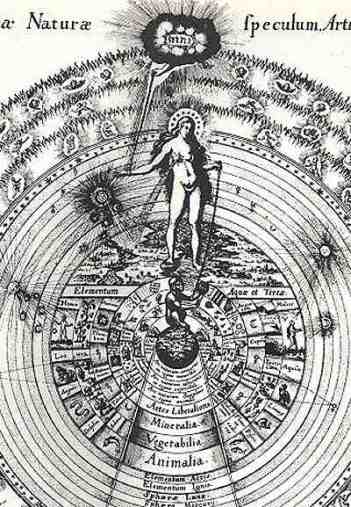
At least part of our imaginative atrophy can be explained by the fact that capitalism, like all political-economic systems before has managed to enmesh itself so deeply into our view of the natural world that it’s difficult to think of it as something we ourselves made and hence can abandon or reconfigure if we wanted to. Egyptian pharaohs, Aztec chieftains, or Chinese emperors, all made claims to rule that justified themselves as reflections of the way the cosmos worked. The European feudal order that preceded the birth of capitalism was based on an imagined chain of being that stretched from the peasant in his field to the king on his throne through the “angelic” planets to God himself- out there somewhere in the Oort Cloud.

The natural order that capitalism is thought to reflect is an evolutionary one which amounts to a bias against design and control. Like evolution, the “market” is thought to be wiser than any intentional attempts to design steer or control in could ever be. This is the argument one can find in 19th century social Darwinist like Thomas Huxley, a 20th century iconoclast like Friedrich Hayek, or a 21st century neo-liberal like Robert Wright, all of whom see in capitalism a reflection of biological evolution in that sense. In the simplest form of this argument evolution pits individuals against one another in a competition to reproduce with the fittest individuals able to get their genes into the next generation. Capitalism pits producers and sellers against others dealing in similar products with only the most efficient able to survive.  History seemed to provide the ultimate proof of this argument as the command economy of the Soviet Union imploded in the 1980’s and country after country adopted some sort of pro-market system. The crash, however,  should have sparked some doubts.

The idea that the market is a social version of biological evolution has some strong historical roots. The late Stephen Jay Gould, in his essay “Of bamboos, cicadas and the economy of Adam Smith” drew our attention to the fact that this similarity between evolution and capitalism might hold not because the capitalist theory of economics emerged under the influence of the theory of evolution but the reverse. That the theory of evolution was discovered when it was because Darwin was busy reading the first theorist of capitalism- Adam Smith. I am unable to find a link to the essay, but here is Gould explaining himself.

The top down mercantilist economy Smith attacked in his Wealth of Nations, according to Gould, must have seemed to Darwin like the engineering God of William Paley in his Natural Philosophy. Paley was the man who gave us the analogy of God as “watchmaker”. If you found a watch on the beach and had never seen such a thing before you could reasonably assume it was designed by a creature with intelligence. We should then reason from the intricate engineering of nature that it was designed by a being of great intelligence.

Adam Smith was dealing with a whole other sort of question- how do you best design and manage an economy? Smith argued that the best way to do this wasn’t to design it from the top down, but  to let the profit motive loose from which an “invisible hand” would bring the best possible economic order into being. In the free market theory of Smith, Darwin could find a compelling argument against Paley. The the way you arrived at the complex order of living things was not to design it from on high but to let the struggle for reproduction loose and from an uncountable number of failures and successes would emerge the rich tapestry of life which surrounds us in words of a much later book on the topic by Richard Dawkins, the “designer” of nature was a Blind Watchmaker.

The problem with thinking our current economic system reflects the deep truth of evolution is not that the comparison lacks a grain of truth, and it certainly isn’t the case that the theory of evolution is untrue or is likely to be shown to be untrue as something like the Great Chain of Being that justified the feudal order was eventually shown to be untrue. Rather, the problem lies with the particularly narrow version of evolution with which capitalism is compared and the papering over of the way evolution often lacks the wisdom of something like Smith’s “invisible hand”.

Perhaps we should borrow another idea from Gould if we are to broaden our evolutionary analogy between evolution and capitalism. Gould pioneered a way to understand evolution known as punctuated equilibrium. In this view evolution does not precede gradually but in fits and starts with periods of equilibrium in which evolutionary change grinds to a halt are ended by periods of rapid evolutionary change driven by some disequilibrating event- say a rapid change in climate or the mass appearance of new species such as in the Columbian Exchange. This is then followed by a new period of equilibrium after species have evolved to best meet the new conditions, or gone extinct because they could not adapt and so on and so on.

The defining feature of late capitalism, or whatever you chose to call it, is that it is unable to function under conditions of equilibrium, or better, that its goal of ever increasing profits is incompatible with the kinds of equilibrium found in mature economies. This is part of the case the financial journalist Chrystia Freeland makes in her engaging book Plutocrats. The fact that so much Western money is now flowing into the developing world stems from the reality that the rapid transformation in such places makes stupendous profits possible. Part of this plethora of potential profits arises from the fact that areas such as the former Soviet Union China and countries that have undergone neo-liberal reforms- like India- are virgin territories for capitalist entrepreneurs. As Rosa Luxemburg pointed out during the last great age of globalization at the end of the 19th and beginning of the 20th century capitalism was the first system “that was calculated for the whole earth”.

To return to the analogy with evolution, it is like the meeting of two formerly separated ecosystems only one of which has undergone intense selective pressures. Capitalist corporations whether Western or imitated are the ultimate invasive species in areas that formerly lived in the zoo- like conditions of state socialism.   In the mature economies such as those of the United States, Europe, and Japan the kinds of disequilibrium which leads to the ever increasing profits at the root of capitalism have come in two very different forms- technological change and deregulation. The revolution in computers and telecommunications has been a source of disequilibrium upending everything from entertainment to publishing to education. In the process it has given rise to the sorts of economic titans, and sadly inequality,seen in a similar periods of upheaval. We no longer have Andrew Carnegie, but we do have Bill Gates. Standard Oil is a thing of the past, but we have Google and Facebook and Amazon.

The transformation of society that has come with such technological disequilibrium is probably, on net, a positive thing for all of us. But, we have also engendered self-inflicted disequilibrium without clear benefit to the larger society. The enormous growth in the profits and profile of the financial industry came on the back of the dismantling of Depression era controls making financiers and financial institutions into the wealthiest segment of our society. We know where that got us. It is as if a stable, if staid, island ecosystem suddenly invited upon itself all sorts of natural disasters in the hope of jump starting evolution and got instead little but mutants that threaten to eat everything in sight until the island became a wasteland. Late capitalism is like evolution only if we redact the punctuated equilibrium. It is we ourselves who have taken to imposing the kinds of stresses that upend the economy into a state of permanent disequilibrium.

The capitalism/evolution analogy also only works under conditions of a near perfect market where the state or some other entity not only preserves free competition at its heart but intervenes to dismantle corporations once they get too large. Such interference is akin to the balancing effect of predation against plants or animals that exhibit such rapid reproduction that if the majority of them were not quickly eaten they would consume entire ecosystems.  Such is the case with the common aphid which if left to its devices would have one individual producing 1,560,000,000,000,000,000,000,000 (1 heptillion, 560 hexillion) offspring!

The balance of nature is a constraint that every species is desperate to break out of just as at the root of every corporation lies the less than secret wish to have eliminated all of its competition. Most of the time predation manages to prevent the reproductive drive of any one species from threatening the entire ecosystem, but sometimes it fails. This is the case with the giant fungus Armillaria ostoyae whose relentless growth kills the trees above it and smothers the diverse forest ecosystem from which it had emerged.

We can complain that the failure of the government to break up giant corporations has let loose the like of Armillaria ostoyae. Calls to dismantle the big banks after the financial crisis fell on deaf ears. Big banks and mega-corporations can now point to their global presence and competition against other behemoths to justify their survival. We couldn’t dismantle Google if we wanted too because everything left would be swallowed by Baidu.

And it’s not only that the government is failing to preserve market competition by letting companies get too big, it’s also distorting the economic ecosystem to favor the companies that are already there. The corruption of democracy through corporate lobbying has meant that the government, to the extent that it acts at all, is not preserving free competition but distorting it. To quote from Plutocrats:

“Most lobbying seeks to tilt the playing field, in one direction or another, not level it.” (262)

Another, and for my part much more galling oversight of the capitalism/evolution analogy is that it tends to treat any attempt at design, guidance or intention on the part of the society at large as somehow “unnatural” interference in what would otherwise be a perfectly balanced system. What this position seems to conveniently forget is that the discovery of Natural Selection didn’t somehow lead to the end of Artificial Selection– instead quite the opposite. We don’t just throw a bunch of animals in a room and cross our fingers that some miracle of milk or egg production will result. What we do is meticulously shape the course of evolution using some constraint based on our hoped for result.

It we who have established the selective criteria of maximizing and increasing profits and growth to be the be all and end all of a corporation’s existence when we could have chosen a much different set of selection criteria that would give rise to completely different sorts of economic entities. Governments already do this when they force industries to comply with constraints such as health and safety or environmental requirements. Without these constraints we get the evolution of economic entities that are focused on maximizing profits and growth alone, man made creatures which giant fungus like care little for the people and societies underneath them.

Related to this is another evolutionary assumption shared by proponents of the unfettered free market, this one with somewhat dubious scientific validity. Those who believe capitalism can run itself seem to subscribe to an economic version of James Lovelock’s “Gaia Hypothesis”.  Recall, that Lovelock proposed that the earth itself was a kind of living organism that had evolved in such a way as to be self-regulating towards an environment that was optimal for life. Human beings, if they were crazy enough to challenge this Gaian equilibrium were asking for extinction, but life itself would go on until it faced a challenger it would be unable to best- the earth’s beloved sun.

Belief that the technological world is a kind of superorganism can be found thought like these of the journalist Robert Wright that I have quoted elsewhere:

Could it be that, in some sense, the point of evolution — both the biological evolution that created an intelligent species and the technological evolution that a sufficiently intelligent species is bound to unleash — has been to create these social brains, and maybe even to weave them into a giant, loosely organized planetary brain? Kind of in the way that the point of the maturation of an organism is to create an adult organism?”

In this quote can be found both of the great forces of disequilibrium unleashed by late capitalism, both the computer and communications revolution and globalization. But it seem that this planetary brain lacks the part of our neural architecture that makes us the most human- the neocortex, by which we are able to act intentionally and plan.

The kinds of hair-trigger threads we are weaving around society are good in many respects, but are not an answer to the problem of our long term direction and can even, if they are not tempered by foresight, themselves lead to the diminution of long term horizons in the name of whatever is right in front of our nose, and spark crises of uninformed panic lacking any sense of perspective. Twitter was a helpful tool in helping to overthrow Middle Eastern dictators, but proved useless in actually establishing anything like democracy.

Supercomputers using sophisticated algorithms now perform a great deal of the world’s financial transactions in milliseconds,  and sometimes lead to frightening glitches like the May 2010 “flash crash” that may portend deeper risks lying underneath a world where wealth is largely detached from reality and become a sea of electrons. Even if there are no further such crashes our ever shortening time scale needs to be somehow tempered and offset with an idea of the future where the long term horizon extends beyond the next financial quarter.

 Late 21st century capitalism with its focus on profit maximization and growth, where corporations have managed to free themselves from social constraints, and where old equilibriums are overturned in the name of creating new opportunities is just one version of a “natural” economic system.  We are free to imagine others. As Graeber hoped we would start to wonder what different kinds of economic systems might be possible besides the one we live in. The people we would do best turn to when it comes to imagining such alternatives are unlikely to come from the ranks of economists who are as orthodox as any medieval priesthood, or our modern fortune-tellers- the futurists- who are little better than “consultants” for the very system we might hope to think our way beyond.

No, the people who might best imagine a future alternative to capitalism are those who are the most free of the need to intellectually conform so as to secure respectability, tenure, promotion, or a possible consulting gig, and who have devoted their lives to thinking about the future. The people who best meet this description today are the authors of science and speculative fiction. It will be to their success and failure in this task that I will turn next time…

Inventing a New World

As the sun is setting into the Pacific Ocean at the end the terminus of Western Civilization, Western Civilization ends here in California at Venice Beach, so we stood there inventing a new world…

                                                                                                                                                 Ray Manzarek

I had been anxiously awaiting Stewart Brand’s scheduled talk at The Long Now which he gave this last Tuesday. Revive and Restore Brand’s project which will explore the prospect of bringing back extinct species is just the latest project of this intellectual maverick and pied-piper of the digital, and what may now be the opening rounds of the biological age. Brand has been a sort of weathervane for the cultural winds of American, or rather a very influential subset of American culture.

He began his career as an ecologist, but quickly became a sort of Forrest Gump of the major cultural and technological currents appearing out of San Francisco and what would become known as Silicon Valley- trails that radiated outward to influence both America and the larger world.

He makes an appearance in Tom Wolfe’s The Electric Kool Aid Acid Test due to his association with Ken Kesey’s Merry Tricksters, and founded the hippie back to the land bible- The Whole Earth Catalog– a project which a technology giant like Steve Jobs could cite as one of his inspirations. We have Brand to thank for the first iconic pictures of our “big blue marble” from space, for he led a public campaign for NASA to release these photos of earth it had kept secret.

It is somewhat poignant that Brand made his first entry into public consciousness here with the Apollo moon landings. The American foray to the moon proved to be the capstone, rather than as was thought at the time a stepping stone, on a great world- civilizational project to settle the worlds beyond earth. It was a project that required the mass resources of the state and it capacity for committing itself to goals that spanned across generations. This was the same state that Brand and his generation feared, quite rightly, might just end up killing us all. Indeed, the very technologies which threatened the world with thermonuclear armageddon brought us into earth orbit and allowed humans to leave their footprints on our beloved moon.

States don’t do projects like the Apollo missions anymore. The only consolation being that they don’t threaten to kill us off in a nuclear holocaust either. Some saw this twilight coming or helped it along. Brand and his fellow travelers represented a generational rebellion against the “system” and the “establishment” for the way it both crushed individuals and the kinds of existential risks it posed to both humanity and the natural world. What was odd about Brand in this mix of rebels and hippies was the instrument he chose to be the primary tool against the system wasn’t psychedelic drugs or music but the computer- a device that up until then in the form of corporate and government mainframes was associated with most dehumanizing features of the system itself- turning human being into “numbers”.

In the 1970s and 80s Brand helped create the idea that computers and computer networks could be transformed into a liberating force of individual empowerment and personal exploration, and to this effect not only brought hackers to public attention, but helped establish another bible, this one for the Internet during the period of the dotcom boom of the 1990s, Wired Magazine.

In the late 1990s Brand launched yet another bold project, The Long Now Foundation, whose mission is to take a long term perspective of human affairs- 10,000 years into the human past and 10,000 years into its future. As he himself put it:

Civilization is revving itself into a pathologically short attention span. The trend might be coming from the acceleration of technology, the short-horizon perspective of market-driven economics, the next-election perspective of democracies, or the distractions of personal multi-tasking. All are on the increase. Some sort of balancing corrective to the short-sightedness is needed-some mechanism or myth which encourages the long view and the taking of long-term responsibility, where ‘long-term’ is measured at least in centuries. Long Now proposes both a mechanism and a myth.

The Long Now Foundation often deals with topics which the state is no longer up to or those which have such a global aspect that it’s difficult to frame them within the context of territorially defined states at all.

Revive and Restore seem like a poignant culmination point for the 74 year old Brand bringing together his first love of ecology, his belief in the utopian potential of technology, and his interest in understanding and coming up with solutions to problems within a wide historical arc. The effort to revive extinct species, not just in zoos, but in the context of restored habitats is a perfect long term project that would take multiple generations to achieve. It seeks to undo some of the damage from our ancestors not just from the recent past, as is the case from extinctions in the early early part of the last century such as the Passenger Pigeon and the Tasmanian Tiger, but going back to our spear throwing ancestors who killed off megafauna such as the Woolly Mammoth  at the very beginning of Brand’s long now.

The world would be a better place if there were more Stewart Brands, nevertheless, I think it might be wise to consider not so much his current project as the assumptions that have been at the root of most of them, assumptions he brought from the commune movement of the early 1970s whose attitude towards the political world was that it was rotten to the core and so- the hell with it.

These were assumptions that would be widely shared among a certain segment of the left- represented by Brand and his fellow travelers, and even more so by the right beginning with the same man who presided as governor of the tie- dyed California of Brand’s young adulthood, Ronald Reagan. Both would so revolutionize the world that by the early 21st century techno-philanthropists and visionaries of the kind that surround Brand and his projects would be trying to fulfill many of the roles that were formerly the task of governments-  the founders of corporate titans whose very nature as global entities under constant innovative pressure left traditional forms of government starved of the very funds that allow it to function.

The argument that Brand and the people around him were largely responsible for our ideas that digital technology would be a liberating force but had they also brought into this discourse a kind of disconnectedness from surrounding social reality has been made before, and excellently, by Fred Turner in his From Counterculture to Cyberculture. Yes, the internet and personal digital technology are liberating, but the idea that they are purely so can only be supported when one ignores the underlying social reality upon which they rest. Smart phones in our hands or computers on our desktops bring with them all sorts of potential, but one needs to remember that there are other, and often low paid, human beings who make such things. The communications revolution allows and amazing degree of personal empowerment, but it has also run hand in glove with perhaps the largest explosion of economic inequality in the history of both the United States and the larger world.

The Long Now’s Revive and Restore is a sexy project that has managed to get a lot of press, yet, there is a danger that the digerati are merely building the 21st century version of the Egyptian pyramids- lasting monuments that nonetheless end up sapping. or at least fail to support, the society underneath them. Just as needed are efforts to gather the San Francisco elites who flock to The Long Now’s wonderful seminars to discuss how to get their companies revenue into the hands of governments, or at least those parts of the government that are doing things the digerati consider worthwhile. This is the lesson to be drawn from the recent tax scandal involving Apple, which through clever accounting tricks that are ubiquitous across the large multi-national companies was able to avoid tens of billions in taxes.

Recovering the billions in taxes lost from Apple alone would allow us to do far more in the effort to protect at risk species and habitats than any effort to revive lost species. With 10 billion dollars we could triple the budget of NOAA from 5 to 15 billion. That would certainly help at risk marine life and habitats, but if our goal was to confront extinction directly, recovering just 10 billion from Apple would allow us to triple the combined budget for the US Fish and Wildlife Service’s Endangered Species Program.

It is certainly the case that the tech-giants- Apple, Google, Microsoft,  Facebook and Amazon along with all the great American multinationals are now global companies to an extent that being able to capture some of their revenue for the purpose of supporting the community from which they spring might be well nigh impossible. It is also the case that forums such as The Long Now Foundation, the TED Conference, or most of all The World Economic Forum at Davos are some of the few places, almost all of them dominated by non-government actors, where the global aspects of many of our problems are acknowledged and the idea of a common future for humanity- the very idea Brand wanted to get across by pushing NASA to publish its photos of earth from space- embraced. That is, global intellectual and business elites realize there is need for global coordination and action across a whole range of problems if humanity is to prosper and some might argue even survive.

As Peter Diamandis points out in his Abundance, today’s economic titans, a great number of which rose to prominence on the back of the computer revolution foreseen and pushed forward by Brand, are much more socially conscious than any of their predecessors. Today’s elites are not only aware of global problems they are desperate to do something meaningful to address them. Yet, in presenting this group of innovators whom Diamandis calls “techno-philanthropists” as capable of solving the world’s problems almost single handedly, through the application of the same technological and entrepreneurial methods through which they built their high tech companies, Diamandis distorts the relationship between techno-philanthropists and the state by overplaying the impact of the former and almost ignoring the impact of the latter.

From Christina Freeland’s insightful book, Plutocrats, here is Bill Gates head of the largest and most laudable of the techno-philanthropist on the relationship between government and his Bill and Melinda Gates Foundation:

Our foundation tends to fund more of the up-front discovery work, and we’re a partner in delivery, but government funding is the biggests. Take delivering AIDS medicine. We did the pilot studies that you could deliver ARBs [angiotensin II receptor blockers] in Africa, and then PEPFAR [the U.S. President’s Emergency Plan for AIDS Relief, the U.S. government program which is five billion [dollars] a year, which is way more than our whole program, just that one U.S. government help program- just one country- came in and scaled up from that. (75-76)

The dangers of the institutions created and supported by government are that they will degenerate as rules and procedures accumulate over time into the kinds of arbitrary bureaucracy presented in Franz Kafka’s dystopian novel The Castle where the system has become so detached from its original purpose to be not only incomprehensible but pointless. The second danger is that those who belong to such institutions will confuse the well being of the institution and its members with the goals of the institution itself.

The innovative nature of technological-philanthropy might be able to break through the Byzantine walls of bureaucracies that have themselves now become part of the problem- you can see something like this in The Bill and Melinda Gates Foundation challenge to entrenched educational interests such as teacher’s unions. But this isn’t the whole story.

The types of institutions that spring from government or something like government are necessary for the slow plodding work of pursuing goals over multi-generational spans of time. Their existence is necessary for any task we hope to accomplish that cannot be achieved all in one go. These are precisely the types of problems Brand believes society is no longer addressing- the inspiration behind his organization The Long Now.

Added to this aspect of being multi-generational problems many of the world’s challenges are, as the current elites recognize, global in scope. Climate change is a global problem that will not be solved overnight, the same can be said for the threat from asteroids or pandemics, or the sixth great extinction. Many security problems now have a global aspect as will the need to find a working modus vivendi with potentially transformative technologies such as synthetic biology. The pictures of our shared earth that Brand pressured NASA to publish also remind us that the natural beauty of the earth and even its cultural and historical legacy is something all of us on our small world share and need to collectively preserve.

One of our primary problems is how to develop and support the kinds of international institutions that are necessary for our new global world in an era dominated by multinational corporations that skillfully avoid taxation by “locating” in the country with the lowest tax rate?

Here is an idea: perhaps we could initiate a global tithe on these world spanning corporations, a minimum tax that would be funneled into existing international institutions and perhaps new ones that support the long term future of humanity along with the preservation of the biosphere and the legacy of life on earth in all its aspects. This would truly be a Long Now type endeavor one that would help close the rift between the new innovative elites and the “establishment” they abandoned in the heady utopianism of the late 20th century.

Reflections on Abundance

Great Chain of Being and the Feudal Orders


It is hard to avoid getting swept up in the utopian optimism of Peter Diamandis.  The world he presents in his Abundance: The Future is Better Than you Think is certainly the kind of future I would hope for all of us: the earth’s environment saved and its energy costless, public health diseases, global hunger and thirst eradicated, quality education and health care ubiquitous (not to mention cheap) and, above, all extreme poverty at long last conquered.

 The way Diamandis gets us from here to there is almost all a matter of increasing efficiency through technological innovation. The efficiency of solar cells is rising exponentially along with a whole suite of clean energy options from fuel producing organisms created through synthetic biology to Fourth Generation nuclear power plants that not only manage to not produce any radioactive byproduct, they are safe from Three Mile Island style disasters, consume old nuclear waste and are so small they actually don’t need anyone to run them.

 Then there is the future of toilets. Hypothetical sewage systems that in addition to not using any of our precious water, can use human waste as a home brewed power source, and produce a natural form of agricultural fertilizer to boot. Access to a clean toilet is actually a very big deal. 2.5 billion people on earth do not have access to a clean toilet with the effect that 1,800 children die needlessly from waste borne illness each day.

Amazingly enough more people have access to cellphones than clean toilets as the use of the former has exploded over the preceding decade, and with this factoid appeared my first doubts regarding Diamandis’ assumptions, but for now let’s stick to the optimism of solutions.

 Far too many people go hungry in the world today, 925 million or one out of every 7 of us, according to Diamandis (102), but that might be about to get a whole lot worse. That’s because the world’s population is rapidly headed towards 9 billion while our ability to increase agricultural yields in the way we did with the Green Revolution has stalled. Thankfully, Diamandis sees technological solutions on the horizon- genetically modified crops, including one of the best ideas I have heard in years that of “golden rice”, that is rice fortified with the essential and often missing vitamin in the diet of the poor- Vitamin A.  There are also vertical farms where crops are grown using aeroponics, giving a whole new meaning to “locally grown” along with bringing agriculture into the “internet of things” equipping plants and animals with sensors that give constant feedback and allow the meticulous allocation of water, nutrients, light, temperature and pesticides. There is also the long promised “meat in a vat” promising a final rapprochement between carnivores and herbivores everywhere. World running out of fresh water? No problem, technologies are in the works that can cheaply realize the perennial human dream of turning the salted oceans into a drinkable Niagara.

 Then there is the education of tomorrow: if much of essential learning in the world today is either absent, as in large parts of the developing world, or composed of factory age style education that lumps children into groups and stamps them out like Model T’s, technology promises to solve that too. Salman Khan, whose Academy I love, has brought learning to anyone with an internet connection. Massive Open Online Courses -MOOCS- have done Khan one better and are now bringing the classrooms of elite universities to the masses. Advances in artificial intelligence promise a future where every child (and perhaps adult) has their own customized tutor and moves through the world of knowledge not based on some cookie cutter idea of what an educated person looks like, but based on their own interests, abilities and learning styles.

 The doctorless masses, especially those in the developing world, are about to get their own personal assistants as well- automated nurses and doctors brought to them through the miracle of their cell phone and other wireless technology.

 All these developments Diamandis hopes will raise the world’s bottom billion up through Maslow’s Pyramid to the point where the bear struggle to survive no longer prevents individuals from pursuing self-actualization. A billion new entrants to the global economy will make a damned good consumer market to boot.

 Every bone in my body hopes Diamadis’ predictions bear fruit and believes we should push forward at every level, both public and private, technological innovations to address many of the world’s problems. There are, however, a number of big- questions Diamandis does not address- issues like inequality and technological unemployment, and the tensions between globalization and democracy- that should give us pause when it comes to the essentials of Diamadis’ argument which in a nutshell boils down to this: that most of the world’s deepest problems are to be solved by the application of technology to increase efficiency, and that a good deal of these solutions will be spurred on by a class that combines aspects of business, science and technology. and philanthropy, the so called techno-philanthropists of which Diamandis counts himself.

 Inequality gets barely a mention in Abundance and when it does it is brought up in the carbon cutout form of “the rich get richer while the poor get poorer” only to be dispatched with with a wave of Diamandis’ hand. Sometimes the things unmentioned in a good book on closer inspection turn out to be somehow deeply interwoven with the author’s underlying assumptions. The primary target of Abundance is not how to get the sputtering US economy back into motion it is how technology might be used to get the horribly poor 2.5 billion people who struggle on a little more than a dollar a day out of such extreme poverty without as a consequence wrecking the planet. Behind these billions of the poor lies a sad statistic that reveals a great deal about the nature of our new global economy that, as David Rothkopf puts it in his Superclass, The Global Power Elite and the World They Are Making:


The reality is that the combined net worth of the world’s richest thousand or so people- the planet’s billionaires- is almost twice that of the poorest 2.5 billion. (xv)

 I do not know what it is like going to sleep knowing that you own more than hundreds of millions of people many of whom live in conditions you would not think fit for your pets, but somewhere it has to pull on the conscience. When you hold Diamandis’ argument in your hand and spin it so that you can see it from the view of the bottom up what you get, I think, is a kind of shaving off of these sharp edges of egregious human inequality in order to justify what amounts to a still pretty extreme view of what “normal” inequality looks like. It’s a hell of alot easier to justify your G550 when millions of children aren’t living in garbage.

 The fact that Diamandis’ argument is at bottom a justification for an only somewhat less extreme form of today’s unprecedented levels of inequality can be seen in one of the primary vectors through which he thinks the “bottom billion” will be raised out of the most dehumanizing poverty not nation states, international institutions, or world government, but those Diamandis calls “techno-philanthropists” that is people with both the technological prowess and the capital to solve the major energy, food, water, education and communication problems that he holds responsible for extreme poverty. His models for this are not only Bill Gates and his Bill and Melinda Gates Foundation, an institution that I do believe when the history books are written will be remembered as one of the most positive and impactful initiatives of the early 21st century, but also the old “robber barons” of the late 19th century of Andrew Carnegie and John D. Rockefeller. For Diamandis the robber barons were economically transformative figures that in addition left a lasting cultural and educational legacy that has benefited us all. Doubtless, but then no mention is made of how the likes of Carnegie achieved this enormous wealth he could use for our benefit by earning ten thousand times the salary of his lowest paid workers. (Superclass 102)

 Diamandis is speaking from the perspective of a global elite, the people who hobnob at Davos, and whip up sleek versions of saving the world at TED, people that quite rightly, and much unlike the provincial bumpkins of American national politics, are conscious of the enormous problems found in the world. Diamandis thinks the solution to these problems is an increase in technological efficiency which only raises questions when one remembers that is this very efficiency which is the source of the global elites enormous wealth in the first place, and is an area where their global interests collides head on with the economic and social reality of the developed world’s democracies from which most of this elite still hails.

 Like Carnegie and Rockefeller and unlike many of the elites of old today’s superclass have their money and the power that comes with it because they have been transformative figures and have largely affected this transformation through quantum leaps in  efficiency- for those old enough- think of how difficult it was to find information before Larry Page and Sergey Brin invented Google, or how easy Jeff Bezos’s Amazon made shopping for books or anything else or how expensive necessities were before Sam Walton built Walmart. Diamandis promises more of these revolutions in efficiency this time targeted directly at the world’s poorest. Yet already there is an elephant in the room.

 The largely unacknowledged problem is that globalization and the revolutions brought about by the continued progress of Moore’s Law have been of enormous benefit to the developing world and a decidedly mixed bag for the developed countries. To quote John Cassidy from the New Yorker from back in 2011: 

To me, what is really, really alarming is this: a typical American male who works full time and still has a job is earning almost exactly the same now as his counterpart was back in 1972, when Richard Nixon was in the White House, O. J. Simpson rushed a thousand yards for the Buffalo Bills, and Don McLean topped the charts with “American Pie”

 Both globalization and Moore’s Law enabled revolutions have, however,  been a miracle for the world’s poor- especially those of the world’s two most populous countries China and India- something the ever entertaining Hans Rosling brings home with gusto here.  The uplifting effects of globalization are now, at long last, even being felt in Africa, and Diamandis is right to point out the profound changes cell phones have brought to that continent.

 How is such a discrepancy between the rich/developed and poor/developing world to be explained? I think at least part of it can be explained this way:  if technological innovation is all about creative destruction then perhaps the developed and developing world do not get the two in equal measure. This is because in the developed world there is an awful lot to destroy. Cell phones in North America, Europe and Japan replaced well established landlines, whereas cell phones in the developing world had very little to replace at all. Automation has been in a generation long race with the poorly paid factory workers of the developing world as to which could produce goods more cheaply, but both left developed world manufacturing workers in the dust. Diamandis’ prescriptions fails to acknowledge this disconnect of globalization and technological innovation in terms of their varied impact on developed and developing economies to merely embrace the trend.

 It is one thing to replace nurses with cell phone apps where few nurses are to be found-the situation in the developing world- and quite another in an economy such as that of the US where not only do millions make their living doing such tasks but where we have spent a decade or more pushing people towards this career on account of a looming shortage of health care workers. Replacing non-existent teachers with AI tutors is all well and good where there are very few teachers to begin with, but what do you do when you have millions of people who have committed themselves to this noble profession who have been replaced by self-directed videos or a teaching bot?

 We have seen the idea that globalization and technology has the effect of pushing down wages for the majority while creating at the same time a spiked world of the super-wealthy before. This was essentially the future as written by Karl Marx- a still relevant  thinker who gets no mention from Diamandis. Marx might have been widely off in terms of his historical timeline, but correctly identified the deep trend of capitalism to push in this direction. If we are at the beginning stages of developing something like Marx’s bi-polar class system we might ask what took these predictions so long in coming about? Marx missed a lot of things- from the strength of unions to the willingness of the state to act against the interest of economic actors, which were important in delaying his predictions but tangential here.

 Someone might have been able to prove to Marx, writing in the 1800s, that his ideas were going to take a long time to be anywhere close to reality with the simple exercise of asking him how long he thought it would take until the majority of available occupations would be replaced by mechanized labor or labor so simplified that it could be done by a human being with even the most rudimentary education. How long would it take before there was an automated doctor, automated lawyer, automated journalist like Marx himself. How long would it be until shopkeepers and bureaucrats could be replaced by machines? For it was fields such as these that exploded in growth after the decline of the craft guilds and the mechanization of agriculture, both brought about by machines and the new ideas regarding the division of labor in which workers were turned into cogs of production. Marx might have then seen that the near future in front of him would be less likely to be the age of revolution than a golden age of the middle class as societies were able to tap millions of workers who had been let loose by the end of the craft guilds and above all the mechanization of the farms and put then to work at non-automated tasks. Today’s situation might prove different because the kinds of innovations we are pushing towards, for the developed economies, might end up leaving far too many people without a job. Unless that is we can come up with a whole host of occupations that will remain off limits to AI for quite some time.

 I have no real solution to this dilemma other than to caution skepticism towards the all too common view that technology is somehow a panacea to all, rather than just some, of our problems and that innovation is merely a matter of gain without real and profound costs. Above all, I would warn against attempts to read our present condition as somehow indicative of the “destiny” of life, our world, or the universe itself or at least not in ways where such views can be used as justifications for what in the end remain political decisions.

 Towards the beginning of Abundance Diamandis presents a picture of the evolution of life moving through stages of specialization and cooperation from the singular prokaryotes to the cooperative eukaryotes with their internal specialization to multicellular organisms. Diamandis leaning on Robert Wright takes this story of specialization and cooperation up another level to us and our global civilization built on yet greater specialization and complexity. In a separate article that in some sense is merely an extension of the argument proposed by Diamandis Wright discusses the rise of the internet and the way it has allowed human beings to weave themselves together, asking:

Could it be that, in some sense, the point of evolution — both the biological evolution that created an intelligent species and the technological evolution that a sufficiently intelligent species is bound to unleash — has been to create these social brains, and maybe even to weave them into a giant, loosely organized planetary brain? Kind of in the way that the point of the maturation of an organism is to create an adult organism?”

 On the one hand this view rings true to me, but then I start to think about the life and nature of our 21st century elites who have thrown off their ties to the local and the national to live their lives enmeshed in global networks of the rich and powerful. Innovators who have built, own, and control the very networks through which a world that is for the first time in history truly one has come about. People who whatever their virtues reap enormous benefits from the wealth they possess and the power they exercise, who  already act in some sense like Wright’s “planetary brain”. It’s then that I remember how invisibly political such ideas are and wonder- was there ever an age where the elites of the day did not see their own reign written into the very fabric of the universe itself?

Boston, Islam and the Real Scientific Solution

Arab Astronomers

The tragic bombing on April 15 by the Tsarnaev brothers, Tamerlane and Dzhohkar collided and amplified contemporary debates- deep and ongoing disputes on subjects as diverse as the role of religion and especially Islam in inspiring political violence, and the role and use of surveillance technology to keep the public safe. It is important that we get a grip on these issues and find a way forward that reflects the reality of the situation rather than misplaced fear and hope for the danger is that the lessons we take to be the meaning of the Boston bombing will be precisely opposite to those we should on more clear headed reflection actually draw. A path that might lead us, as it has in the recent past, to make egregious mistakes that both fail to properly understand and therefore address the challenges at issue while putting our freedom at risk in the name of security. What follows then is an attempt at clear headedness.

The Boston bombing admittedly inspired by a violent version of political Islam seemed almost to fall like clockwork into a recent liberal pushback against perceived Islamophobia by the group of thinkers known as the New Atheists. In late March of this year, less than a month before the bombing, Nathan Lean at Salon published his essay Dawkins, Hitchens Harris: New Atheists Flirt With Islamophobia   which documented a series of inflammatory statements about Islam by the New Atheists including the recent statement of Richard Dawkins that “Islam was the greatest source of evil in the world today” or an older quote by Sam Harris that: “Islam, more than any other religion human beings have devised, has all the makings of a thorough going cult of death.” For someone, such as myself who does indeed find many of the statements about Islam made by the New Atheists to be, if not overtly racists, then at least so devoid of religious literacy and above all historical and political self-reflection that they seem about as accurate as pre-modern traveler’s tales about the kingdom of the cyclops, or the lands at the antipodes of the earth where people have feet atop their heads, the bombings could not have come at a worse cultural juncture.

If liberals such as Lean had hoped to dissuade the New Atheists from making derogatory comments about Muslims at the very least before they made an effort to actually understand the beliefs of the people they were talking about, so that Dawkins when asked after admitting he had never read the Koran responded in his ever so culturally sensitive way: “Of course you can have an opinion about Islam without having read the Qur’an. You don’t have to read “Mein Kampf” to have an opinion about Nazism ” the fact that the murders in Boston ended up being two Muslim brothers from Chechnya would appear to give the New Atheists all the evidence they need.  The argument for a more tolerant discourse has lost all traction.

It wasn’t only this aspect of the “God debate” with which the Boston bombing intersected. There is also the on going argument for and against the deployment of widespread surveillance technology especially CCTV. The fact that the killers were caught on tape there for all the world to see seems to give weight to those arguing that whatever the concerns of civil libertarians the widespread use of CCTV is something that would far outweigh its costs. A mere three days after the bombing Slate ran an article by Farhad Manjoo We Need More Cameras and We Need Them Now.  The title kinda says it all but here’s a quote:

Cities under the threat of terrorist attack should install networks of cameras to monitor everything that happens at vulnerable urban installations. Yes, you don’t like to be watched. Neither do I. But of all the measures we might consider to improve security in an age of terrorism, installing surveillance cameras everywhere may be the best choice. They’re cheap, less intrusive than many physical security systems, and—as will hopefully be the case with the Boston bombing—they can be extremely effective at solving crimes.

Manjoo does not think the use of ubiquitous surveillance would be limited to deterring crime or terrorism or solving such acts once they occur, but that they might eventually give us a version of precrime that seems like something right out of Philip K. Dick’s Minority Report:

The next step in surveillance technology involves artificial intelligence. Several companies are working on software that monitors security-camera images in an effort to spot criminal activity before it happens.

London is the queen of such surveillance technology, but in the US it is New York that has most strongly devoted itself to this technological path of preventing terrorism spending upwards of 40 million dollars to develop its Domain Awareness System in partnership with Microsoft. New York has done this despite the concerns of those whom Mayor Bloomberg calls “special interests”, that is those who are concerned that ubiquitous surveillance represents a grave threat to our right to privacy.

Combining the recent disputes surrounding the New Atheists treatment of Islam and the apparent success of surveillance technology in solving the Boston bombing along with the hope that technology could prevent such events from occurring in the future might give one a particular reading of contemporary events that might go something as follows. The early 21st century is an age of renewed religious fanaticism centered on the rejection of modernity in general and the findings of science in particular. With Islam being only the most representative of the desire to overturn modern society through the use of violence. The best defense of modern societies in such circumstances is to turn to the very features that have made their societies modern in the first place, that is science and technology. Science and technology not only promise us a form of deterrence against acts of violence by religiously inspired fanatics they should allow us to prevent such acts from occurring at all if, that is, they are applied with full force.

This might be one set of lessons to draw from the Boston bombings, but would it be the right one? Let’s take the issue of surveillance technology first. The objection to surveillance technology notably CCTV was brilliantly laid out by the science-fiction writer and commentator Cory Doctorow in an article for The Guardian back in 2011.

Something like CCTV works on the assumption that people are acting rationally and therefore can be deterred. No one could argue that Tamerlane and his brother were acting rationally. Their goal seemed to be to kill as many people as possible before they were caught, but they certainly knew they would be caught. The deterrence factor of CCTV and related technologies comes into play even less when suicide bombers are concerned. According to Doctorow we seem to be hoping that we can use surveillance technology as a stand in for the social contact that should bind all of us together.

But the idea that we can all be made to behave if only we are watched closely enough all the time is bunkum. We behave ourselves because of our social contract, the collection of written and unwritten rules that bind us together by instilling us with internal surveillance in the form of conscience and aspiration. CCTVs everywhere are an invitation to walk away from the contract and our duty to one another, to become the lawlessness the CCTV is meant to prevent.

This is precisely the lesson we can draw from the foiled train bombing plot in Canada that occurred at almost at the same moment bombs were going off in Boston. While the American city was reeling, Canada was making arrests of Muslim terrorists who were plotting to bomb trains headed for the US. An act that would have been far more deadly than the Boston attacks. The Canadian Royal Mounted Police was tipped off to this planned attack by members of the Muslim community in Canada a fact that highlights the difference in the relationship between law enforcement and Muslim communities in Canada and the US. As reported in the Chicago Tribune:

Christian Leuprecht, an expert in terrorism at Queen’s University in Kingston, Ontario, said the tip-off reflected extensive efforts by the Royal Canadian Mounted Police to improve ties with Muslims.

‘One of the key things, and what makes us very different from the United States, is that the RCMP has always very explicitly separated building relationships with local communities from the intelligence gathering side of the house,’ he told Reuters.

 A world covered in surveillance technology based on artificial intelligence that can “read the minds” of would be terrorists is one solution to the threat of terrorism, but the seemingly low tech approach of the RCMP is something far different and at least for the moment far more effective. In fact, when we look under the hood of what the Canadians are doing we find something much more high tech than any application of AI based sensors on the horizon.

We tend to confuse advanced technology with bells and whistles and therefore miss the fact that a solution that we don’t need to plug in or program can be just as if not more complex than anything we are currently capable of building. The religious figures who turned the Canadian plotters into the authorities were far more advanced than any “camera” we can currently construct. They were able to gauge the threat of the plotters through the use of networks of trust and communication using the most advanced machine at our disposal- the human brain. They were also able to largely avoid what will likely be the bane of first generation of the AI based surveillance technologies hoped for by Manjoo- that is false alarms. Human based threat assessment is far more targeted than the types of ubiquitous surveillance offered by our silicon friends. We only need to pay attention to those who appear threatening rather than watch everybody and separate out potential bad actors through brute force calculation.

The after effects of the Boston bombings is likely to make companies that sell surveillance technologies very rich as American cities pour billions into covering themselves with a net of “smart” cameras in the name of safety. The high profile role of such cameras in apprehending the suspects will likely result in an erosion of the kinds of civil libertarian viewpoints held by those such as Doctorow. Yet, in an age of limited resources, are these the kinds of investments cities should be making?

The Boston bombing capped off a series of massacres in Colorado and Newtown all of which might have been prevented by a greater investment in mental health services. It may seem counter intuitive to suggest that many of those drawn to terrorist activities are suffering from mental health conditions but that is what some recent research suggests.

We need better ways to identify and help persons who have fallen into some very dark places, and whereas the atomistic nature of much of American social life might not give us inroads to provide these services for many, the very connectedness of immigrant Muslim communities should allow mental health issues to be more quickly identified and addressed.  A good example of a seemingly anti-modern community that has embraced mental health services are my neighbors the Amish where problems are perhaps more quickly identified and dealt with than in my own modern community where social ties are much more diffuse. The problem of underinvestment in mental health combined with an over reliance on security technologies isn’t one confined to the US alone. Around the same time Russia was touting its superior intelligence gathering capabilities when it came to potential Chechiyan terrorist including the Tsarnaev family, an ill cared for mental health facility in Moscow burned to the ground killing 38 of its trapped residents.

Lastly, there is the issue of the New Atheists’ accusations against Islam- that it is particularly anti-modern, anti-scientific and violent. As we should well know, any belief system can be used to inspire violence especially when that violence is presented in terms of self-defense.  Yet, Islam today does seem to be a greater vector of violence than other anti-modern creeds. We need to understand why this is the case.

People who would claim that there is something anti-scientific about Islam would do well to acquaint themselves with a little history. There is a sense that the scientific revolution in the West would have been impossible without the contribution of Islamic civilization a case made brilliantly in not at least two recent books Jonathan Lyons’ House  of Wisdom  and John Freely’s Aladdin’s Lamp.  

It isn’t merely that Islamic civilization preserved the science of the ancient Greeks during the European dark ages, but that it built upon their discoveries and managed to synthesize technology and knowledge from previously disconnected civilizations from China (paper) to India (the number zero). While Western Europeans still thought diseases were caused by demons, Muslims were inventing what was the most effective medical science until the modern age. They gave us brand new forms of knowledge such as algebra, taught us how to count using our current system of arabic numerals, and the mapped the night sky giving us the names of our stars. They showed us how to create accurate maps, taught us how to tell time and measure distance, and gave us the most advanced form that most amazing of instruments, a pre-modern form of pocket computer- the astrolabe. Seeing is believing and those who doubt just how incredible the astrolabe was should checkout Tom Wujec’s great presentation on the astrolabe at TED.

Compared to the Christian West which was often busy with brutalities such as genocidal campaigns against religious dissidents, inquisitions, or the persecution, forced conversion, or expulsion of Muslims and Jews, the Islamic world was generally extremely tolerant of religious minorities to the extent that both Christian and Jewish communities thrived there.

Part of the reason Islamic civilization, which was so ahead of the West in terms of science and technology in the 1300s ,would fall so far behind was a question of geography. It wasn’t merely that the West was able to rip from the more advanced Muslims the navigational technology that would lead to the windfall of discovering the New World, it was that the way science and technology eventually developed through the 18th, 19th and 20th centuries demanded strong states which Islamic civilizations on account of geography and a tradition of weak states- in Muslim societies it was a diffuse network of religious jurists rather than a centralized Church in league with the state that controlled religion and a highly internationalized network of traders rather than a tight corporate-state alliance that dominated the economy. Modernity in its pre-21st century manifestation required strong states to put down communication and    transportation networks and to initiate and support high impact policies such as economic standardization and universal education.

Yet, technology appears to have changed this reliance on the state and brought back into play the kinds of diffuse international networks which Islamic societies continue to be extremely good at. As opposed to earlier state-centric infrastructure cell phone networks can be put up almost overnight. The global nature of trade puts a premium on international connections which the communications revolution has put at the hands of everybody. The rapid decline in the cost of creating media and the bewildering ease with which this media can be distributed globally has overturned the prior centralized and highly localized nature in which communication used to operate.

Islam’s diffuse geography and deeply ingrained assumptions regarding power left it vulnerable to both its own pitifully weak states and incursions from outside powers who had followed a more centralized developmental path.  Many of these conflicts are now playing themselves out and the legacies of Western incursions unraveling so that largely Muslim states that were created out of thin air by imperialist powers such as Iraq and Syria- are imploding. Sadly, states where a largely secular elite was able to suppress traditional publics with the help of Western aid – most ominously Egypt- are slipping towards fundamentalism. We have helped create an equation where religious fundamentalism is confused with freedom.

Given the nature of modern international communications and ease of travel we are now in a situation where an alienated Muslim such as Tamerlane is not only plugged into a worldwide anti-modern discourse, he is able to “shop around” for conflicts in which to insert himself. His unhinged mother had apparently suggested he go to Palestine in search of jihad he reportedly traveled to far away Dagestan to make contact with like minded lost souls.

Our only hope here is that these conflicts in the Muslim world will play themselves out as quickly and as peacefully as possible, and that Islam, which is in many ways poised to thrive in the new condition of globalization will remember its own globalists traditions. Not just their tradition as international traders- think of how successful diaspora peoples such as the Chinese and the Jewish people have been- but their tradition of philosophic and scientific brilliance as well. The internet allows easy access to jihadi discourses by troubled Muslims, but it also increasingly offers things such as Massive Open Online Courses or MOOCS that might, in the same way Islamic civilization did for the West, bring the lessons of modernity and science deep into the Islamic world even into areas such as Afghanistan that now suffer under the isolating curse of geography.

International communication, over the long term, might be a way to bring Enlightenment norms regarding rational debate and toleration not so much to the Muslim world as back to it. Characteristics which it in some ways passed to the West in the first place, providing a forerunner of what a global civilization tolerant of differences and committed to combining the best from all the world’s cultures might look like.

Response to James Cross

A fellow blogger, James Cross, who writes at Broad Speculations left some comments that I thought raised enough interesting questions to qualify for a response
in the form of a full blog entry.

Here is part of James’ response to my recent post:  The Shirky-Morozov Debate Or How Facebook Beat Linux.

I am interested in Shirky’s ideas but I am a little at a loss to understand how it would actually work. The Internet and social media have potential for making major changes in collaboration and political activity, but those things are mainly the theater aspect of politics whereas actual politics is about how resources are divided up and who has power.

Shirky’s position, or at least my understanding of it that I laid out in  The Shirky-Morozov Debate, was that Shirky: “sees the potential of governance to follow the open source model of software development found in collectively developed software such as Linux and Github that allow users to collaborate without being coordinated by anyone from above- as opposed to the top-down model followed by traditional software companies i.e. MicroSoft.”

James sees  potential for collaboration and political activity offered by the Internet as  “theater aspects of politics whereas actual politics is about how resources are divided up and who has power”. If I understand James correctly, Shirky et al are pushing on a string; the Internet and related technologies may offer real opportunities for collaboration and political activity, but at the end of the day these aren’t the things that actually count; real politics is about power and dividing up resources.

James’ position as stated in the quote above is a powerful and succinct summation of a realist’s conception of power. It put me in mind of the definition offered by Hans Morgenthau:

Power may comprise anything that establishes and maintains the control of man over man. Thus power covers all social relationships, which serve that end, from physical violence to the most subtle psychological ties by which one mind controls another.  (Politics Among Nations)


With all due respect to both James and the late Morgenthau, while this understanding of power appears to gel with our commonsense notions, I do not think it is correct. For my part, I hold to the definition of power offered by Morgenthau’s friend, Hannah Arendt:


Power corresponds to the human ability not just to act but to act in concert. Power is never the property of an individual; it belongs to a group and remains in existence only so long as the group keeps together (The Crisis of the Republic)

Under this understanding political activity and collaboration aren’t something separate from, less real, in James’ word “actual” than power, instead, political activity, collaboration, and power are all effectively synonymous.

This collaboration or political activity does not need to be understood in a purely positive way: a secret police may collaborate in a country to exercise political control, a conqueror needs the help of local “collaborators” to effectively rule over a conquered  territory. In a positive sense a minority group can join together and with others- collaborate- to secure political rights, a resistance can engage in political activity to overthrow a dictator.  In either sense, collaboration and political activity are the essence of politics not its surface.

Even if we substituted the word “authority” for “power” in James’ formulation so that he would read:   “actual politics is about how resources are divided up and who has authority” I do not think the view of political activity, collaboration, and power being synonymous would change.  Imagine, if you will, that tomorrow some major scandal breaks upon the Obama Administration that is so deep that it alienates not just the people who already oppose him, but the majority of Americans (such as myself) who voted for the man. In such a scenario, the authority of his position as president would be almost useless, and he would be essentially politically paralyzed, not because he had lost his actual position of power, but because he would have lost the base of political support- the political activity and collaboration- that makes such a position meaningful and effective.

Once you start to look at power in this way I think a whole new set of questions start to open up. The questions are no longer necessarily “who holds power?” or “what resources does some group control?”, but, “How open is the system?” “Can any group participate or is political activity- the exercise of power- limited to some select group(s)?” “What are the barriers to participation?”

But, for me, perhaps the most important question  is “what is meant by political participation?” That is, what kinds of political activity/collaboration are encouraged/permitted by the political system.

As mentioned, Clay Shirky, among others, has thought that the Internet in particular, and the communications revolution more generally, would have lowered the barriers to political participation in a way that would make something like truly citizen-directed government possible. An example he cites in one of his talks is the open source crafting of legislation in Utah where the people collectively wrote one of the state’s laws online.  In this view, the answer to the question of “what is meant by participation?” would be decentralized collaboration between citizens who work together to achieve self-chosen ends. It is a model of politics analogous to open-source software creation such as that found with Linx.

The problem with this view is that it is detached from reality.  Nothing like citizen-directed government has really emerged from the Internet, which is far from a “new” technology.  Indeed, if the Obama campaign in 2012 is any indication , in political terms, the Internet is best thought of as a tool of mobilization not direct participation in the form of discussion and debate. Participation is defined here almost purely in terms of mobilization.

In a really interesting way, these developments seems to have brought us back to the era before television when party machines and unions would get out the vote- only now mobilization is done using social media and GOTV efforts targeted at specific individuals.  My lament here is that this politics of mass mobilization has left all the characteristics of political participation Shirky had hoped the Internet would make possible in the dust. Rather than citizen-to-citizen debate and discussion issues are already decided upon in the higher echelons of the political party. Instead of groups being organized horizontally, we are back to the world of the pyramid, with the new technologies being used to foster mobilization receiving centralized direction from the party’s data rich “war-rooms”.

To be honest, I am not even sure you could have something like truly collaborative politics as in Shirky’s Utah legislation example on the mass level of a nation even if all of the technological-political trends would have played out the way he had hoped. If you think the process is ugly now- imagine the Federal budget being crafted as an open source project by the entire country!

Still, I continue to believe that the kinds of possibilities for citizen-directed government cyber-utopians have been preaching about for years still have some potential to be realized, only at a smaller scale. I think the first step in doing this is to remember that the kind of representational democracy we have isn’t the only form of democracy to have ever existed, or perhaps even the best for all purposes.

Lately, for a book I’m working on, I’ve been looking at the most famous democracy of them all, Athenian democracy, which at the very least, offers us an example of a system that tried to maximize the opportunity for individual citizens to engage in political activity.  In what follows immediately below I will not address the glaring flaws of Athenian democracy- imperialism, the condition of women, slavery. Rather, I just want to lay out the mechanics of how their participatory system worked.

Athenian democracy differed from modern democracy in many ways, but most especially in this: that the citizens themselves, rather than their representatives, gathered together in their assembly, called the Ekklêsia, to make political decisions.
The Athenian Ekklêsia included all male, Athenian citizens, of whatever class who were over 18 years of age. It met on a hillside, the Pnyx, south-west of the Agora or marketplace. The assembly began with the words of the herald that seemed to sum up
the whole world-view that underlie Athenian democracy: “Who wishes to speak?” Here, any Athenian citizen, of whatever station, was free to bring to discussion, debate, and a vote anything which they wished.  On the Pnyx, Athenians made decisions such as whether to start or end a war, when to ostracize a citizen ( most famously Socrates),  who to name as a general, whether to found a colony, inaugurate a religious festival, or literally any other question or issue that a member of the Ekklêsia wanted to discuss and decide upon.

Citizens of Athens bore direct responsibility for their decisions in a way citizens today might find hard to grasp.  Especially in decisions of war, Athenians were asked to make complex choices which were likely to have an immediate impact on either themselves or their children.

The Athenian courts or, Dikasteria, represents another of the sharp differences between Athenian democracy and our own.   Whereas our societies are guided by the input of persons deemed to be experts in some distinct domain of human knowledge: lawyers and judges on issues of law, economists in matters of economic policy, foreign policy professionals in areas of international affairs etc. Athenian democracy had a deep distrust of experts, or more clearly, a very narrow range of fields deemed by the Athenians to be capable of true expertise- generalship and water management topped their list, and they possessed a much more widespread faith in the ability of average citizens to come to reasoned decisions on public questions.

A Dikasteria was effectively judge and jury in one. It decided whether to take a case, what evidence was permissible, came down on the question of guilt or innocence, and decided upon the final sentence.

The only qualification for serving as a dikast was being over the age of 30, which suggests that the “expertise” being selected for was life-experience more than anything else.  Dikasteria for a particular trial were huge when compared to modern juries. They  could number anywhere from a low of 500 to a high of 6,000 members. Unlike in modern legal systems, there was no public prosecutor- Athenians brought other Athenians to trial.  Nor were there lawyers, Athenians prosecuted fellow citizens or defended themselves before the dikasts.

In still another sharp contrast to modern democracies, ancient Athens possessed no executive or permanent bureaucracy. What it had was The Council of 500, or Boule.  Members of this body, which was chosen by lot from members of the Ekklêsia served
for a period of one year.  The Boule acted in a coordinating and supervisory relative to the Ekklêsia engaging in such detail oriented tasks as the supervision of public finances, or the assessment of tribute from allies.

The way in which members of the Boule were chosen by lot was indicative of the way in which Athenians viewed the idea of elections.  The idea of electing someone to political office is based on the underlying assumption that someone is, in a sense, more qualified for some position than another person. Given the narrow definition of expertise held by Athenians, the idea that most public offices demanded anything more than requirements in the form of the personal characteristics of morality and judgement, that were possessed by almost everyone, was untenable. All citizens were deemed equally qualified for most public offices.  Election as a consequence was limited to the aforementioned experts such as generals and engineers.

The whole point of the Athenian system was to maximize the possibilities for citizens to engage in substantial political participation. Our system does not have this as a primary goal. Hell, we don’t even have off of work on election day!

Athens then, is at least one model of how politics in a society that put a premium on substantial participation could be organized. Today, I can imagine all sorts of ways that technology could be used today to increase the possibilities for citizens to engage in politics above and beyond voting in elections or working for campaigns while electoral contests are being fought. Technology could help make participation easier, and more compatible with the non-political aspects of modern human life.

For example, cities and towns could adopt something like the Athenian assembly rather than the mayoral and city-council systems now commonly used. Not everyone would have to physically attend an “assembly” if those who wished to participate in some sort of political debate and decision were able to do so virtually.  The key is to make participation as easy, integrated, and seamless with the rest of our lives as possible.  If I can receive updates via Twitter on fantasy football picks, why shouldn’t I be able to get an update on the town council meeting such as “ Proposition X will be held to a vote in so many days. Log-in and vote before such and such a date if you have a position on this issue”.  If I can spend hours of time in a virtual world such as World of WarCraft, can’t I spend a fraction of that in a virtual assembly whose decisions at least have some real world impact.

Would the majority of citizens participate in this sort of decision making?  Probably not, but I have no issue with such participation being self-selecting. If all debates concern you, participate all the time, if some, then just those, or if none, devote yourself to your private concerns, but remember that you now have no justification to complain. The point is to make it as easy as possible for those who want to to have their say- let the numbers shake out whatever way they do. Participation will likely vary over the course of life of the individual and with the general social mood of the society at large.

The limits to the political influence of experts found in Athens are no doubt impossible in our complex technological society, but I can imagine software systems, and expert services that provide information to citizens so they can test assumptions about the potential impact of their decisions from tax policy to water and resource management to zoning rules.  I can imagine the application of a blended model (real world/online) of the Athenian Dikasteria to non-criminal trials, and much of litigation supplanted by community based mediation.

And there I think is a very long background in response to James’ second comment:

I find myself in a rather odd political position of being a small government progressive. I want to find ways to organize society to accomplish progressive goals without an intrusive government.Do you or anyone else have ideas on that?”

A problem, I think, is that if the goal is meaningful participation where the individual can have a substantial impact on the society in which he or she lives, then the level at which many important decisions made by the government emerge will have to move downward. Right now, the level of government where an individual can most easily have an impact, municipal government, falls off the radar of most people. Part of the reason for this is certainly the role of national media which can only cover government at the Federal, and on rare occasions the state level. But, a large part of this inattention to municipal government probably also stems from the fact that almost all important political decisions are made at the higher levels of government.

In order to place real and substantial power at the level where individuals are actually able to shape it, one would have to shift many of the responsibilities and capacities now the prerogative of the Federal and state government, to a level closer to the individual. Oddly enough, this is a change in the direction of more democracy many conservatives would get behind. My guess is that the bottom level for such a unit would be a mid-sized city and its surroundings. If you go much smaller you cannot support the cultural institutions and ways of living that form the bones and sinews of a truly distinct community, go much larger to the level of a nation and the scale no longer supports a true sense of distinct community which is a matter of shared institutions and ways of living, not shared ancestry or ideology.

Perhaps oddly enough, libertarians are at the forefront of attempting to experiment with local level governance. There is Peter Thiel’s idea of utopian seasteading  and the grandson of Milton Friedman who is hoping to create cities based on libertarian principles from scratch in the Third World, at least partially inspired the similar idea
for charter cities of the economist, Paul Romer.

My guess, however, is that, at the end of the day, such experiments won’t work and any shift of responsibility to the municipal level will actually trend in the the direction of progressive government. Even the incredibly successful city-states whose economic performance these movements hope to emulate, such as Singapore, have governments that minimize social divisions and hold the well-being of the poor to be the responsibility of the community.

What the architect of Singaporean society, Lee Kuan Yew, understands is that no true community- as opposed to some gated enclave where wealthy people live- can be composed of only the rich. (It is a disaster for a community when it is composed of only the poor).  The wealthy seem more likely to pony-up if their money goes into the community where they and their children live.  To support progressive politics a community cannot be so small that the rich will simply put up and move, or so large that the wealthy cannot see that from their largess comes a community they and their children want to live in because of the quality of its cultural institutions, its schools, and general social and physical health.

This all may seem utopian, and perhaps, especially in terms of participatory politics it is.  Much of this, however, is echoed by someone like Jane Jacobs who saw a large part of the reason for the decline of the city in the 20th century in the shift of taxing authority away from the city to the Federal government. Though, I have yet to read the book, I believe they are also echoed by in Benjamin Barber’s recent If Mayors Ruled the World where he lays out just how much more effective the mayors of large cities have been at addressing endemic social problems than the ideologically driven national political parties. The danger here is paternalism as both Mayor Bloomberg’s New York, and the aforementioned Singapore of Lee Kuan Yew, seem to attest.

Relocating much of Federal authority to the level of cities might spur major innovations: in energy systems and climate policy, educational systems, food systems, criminal justice, tax policy, promoting economic equality, care for the elderly, health care, and the way we relate to and integrate technological and scientific innovation, which could prove scaleable and serve as solutions to the wider and more important national and international aspects of these issues. It might balance out the mind-numbing homogenization of modern industrial society: ”And each town looks the same to me the movies and the factories” (Simon & Garfunkel, Homeward Bound) from Shanghai, to Moscow, to London to New York.  As mentioned,  it might also put a brake on the tendency of the rich to avoid taxation because the effect of their taxes will be immediately manifest in the communities it which they live.

This century will be the first in which the majority of the human population will live in cities, if they can be allowed to get it right, things will work out for all of us- even for country dwellers like myself. One way to do that would be to relocate some of the powers of national governments regarding taxation, economic, and social policy back to the cities. Here also, I think a different, more participatory, and even more progressive form of democracy could find its 21st century home.

Thanks for inspiring this post James! As always, critical comments from everyone are desired.

The Shirky- Morozov Debate or how FaceBook beat Linux

One thing that struck me throughout the 2012 presidential contest was the Obama campaign’s novel use of Big-Data and targeted communication to mobilize voters. Many of these trends I found somewhat disturbing, namely, the practice of micro-mobilization through fear,  the application of manipulative techniques created in commercial advertising and behavioral economics to spur voter mobilization, and the  invasion of privacy opened up by the transparency culture and technology of social media.

These doubts and criticisms were made despite the fact that I am generally an Obama supporter, would ultimately cast my vote for the man, and was overall delighted by the progressive victories in the election, not least the push back against voter suppression which had been attempted, and only at the last minute thwarted, in my home state of Pennsylvania.

The sheer clarity of the success of the Obama campaign’s strategy makes me think that these techniques are largely a fait accompli, and will be rapidly picked up by Republicans to the extent they can. Political commentators have already turned their eyes to the strategy’s success,  completely ignoring the kinds of critical questions brought to our attention, for instance, by,Charles Duhigg, in The New York Times only a few weeks ago.

Given their effectiveness, there might be very little push-back from liberal voters regarding the way the 2012 campaign was waged, and such push-back might be seen as demands for unilateral disarmament on the part of Democrats should they come from Republicans- in which case the demand might quite rightly be seen as just another example of the GOP’s attempts at voter suppression. Or, should such push back against these techniques come from a minority of progressives in, or allied with, the Democratic party who are troubled by their implications, such complaints might be written off as geriatric whining by out of touch idealists who have no clue on how the new era of networked politics works. And this would largely be right, the campaigns of 2012, and the Obama campaign most especially, have likely brought us into a brand new political era.

A recent article in Time Magazine gives a good idea of how the new science of campaigning works: it is data driven, and builds upon techniques honed in the world’s of advertising and psychology to target both individuals and groups strategically.
Like the world’s of finance and government surveillance it is a new ecology where past, and bogus, claims by individuals to be able to “forecast the future” by ” gut-instinct” has fallen before Big Data and the cold brilliance of the quants.

That data-driven decision making played a huge role in creating a second term for the 44th President and will be one of the more closely studied elements of the 2012 cycle. It’s another sign that the role of the campaign pros in Washington who make decisions on hunches and experience is rapidly dwindling, being replaced by the work of quants and computer coders who can crack massive data sets for insight. As one official put it, the time of “guys sitting in a back room smoking cigars, saying ‘We always buy 60 Minutes’” is over. In politics, the era of big data has arrived.

One can feel for a political pundit such as Michael Gerson who attacked the political predictions of the data savvy Nate Silver in the same way one can feel sympathy for the thick-necked, testosterone heavy, Wall Street traders who were replaced by thinner-necked quants who had gotten their chops not on raucous trading floors but in courses on advanced physics.  And, at the end of the day, Silver was right. Gerson’s “observation” about the nature of American politics in his ridiculous critique of Silver-  given the actual reality of the 2012 campaign- is better understood as a lament than an observation:

An election is not a mathematical equation; it is a nation making a decision. People are weighing the priorities of their society and the quality of their leaders. Those views, at any given moment, can be roughly measured. But spreadsheets don’t add up to a political community. In a democracy, the convictions of the public ultimately depend on persuasion, which resists quantification.

Put another way: The most interesting and important thing about politics is not the measurement of opinion but the formation of opinion. Public opinion is the product — the outcome — of politics; it is not the substance of politics. If political punditry has any value in a democracy, it is in clarifying large policy issues and ethical debates, not in “scientific” assessments of public views.

My main objections here are that this is an aspirational statement- not one of fact, and that the role Gerson gives to pundits, to himself, is absolutely contrary to reality- unless one believes the kind of “clarity” found by paying attention to the talking heads on Fox News is actually an exercise in democratic deliberation.

Yet, there are other ways in which the type of political campaign seen in 2012 offer up interesting food for thought in that they seem to point towards an unlikely outcome in current debates over the role and effect of the new communications technology on politics.

In some sense Obama’s 2012 campaign seems to answer what I’ll call the “Clay Shirky- Evgeny Morozov Debate. I could also call it the Shirky-Gladwell debate, but I find Morozov to be a more articulate spokesman of techo-pessimism (or techno-realism, depending upon one’s preference) than the omnipresent Malcolm Gladwell.

Clay Shirky is a well known spokesperson for the idea that the technological revolution centered around the Internet and other communications networks is politically transformative and offers up the possibility of a new form of horizontal politics.

Shirky sees the potential of governance to follow the open source model of software development found in collectively developed software such as Linux and Github that allow users to collaborate without being coordinated by anyone from above- as opposed to the top-down model followed by traditional software companies i.e. MicroSoft.  Although Shirky does not discuss them in his talk- the hacktivists group of Anonymous and Wikileaks follow this same decentralized, and horizontal model. As of yet, no government has adopted anything but token elements of the open source model of governance though they have, in Shirky’s view embraced more openness- transparency.

In an article for the journal Foreign Affairs in 2011 entitled The Political Power of Social Media, an article written before either the Arab Spring or the Occupy Wall Street movements had exploded on the scene, Shirky made a reasoned case for the potential of social media to serve as a prime vector for political change. Social media, while in everyday life certainly dominated by nonsense such as “singing cats”, also brought the potential to mobilize the public- overnight- based on some grievance or concern.

Here, Shirky responded to criticisms of both Malcolm Gladwell and Evgeny Morozov that his techno-optimism downplayed both the opiate like characteristics of social media, with its tendencies to distract people from political activity, along with the tendency of social media to create a shallow form of political commitment as people confuse signing an online petition or “liking” some person or group with actually doing something.

I do not agree with all  of what Morozov has to say in his side of this debate, but, that said, he is always like a bracing glass of cold water to the face- a defense against getting lost in daydreams. If you’ve never seen the man in action here is a great short documentary that has the pugnacious Belarusian surrounded by a sort of panopticon of video screens where he pokes holes in almost every techo-utopia shibboleth out there.

In his The Net Delusion Morozov had made the case that the new social media didn’t lend themselves to lasting political movements because all such movements are guided strategically and ideologically by a core group of people with real rather than superficial commitment who had sacrificed, sometimes literally everything, in the name of the movement. Social media’s very decentralization and the shallow sorts of political  activities it most often engenders are inimical to a truly effective political movement, and, at the same time, the very technologies that had given rise to social media have increased exponentially the state’s capacity for surveillance and the sphere of a-political distractions surrounding the individual.

And in early 2011 much of what Morozov said seemed right, but then came the Arab Spring, and then the Occupy Wall Street Movement, the former at the very least facilitated by social media, and the latter only made possible by it. If it was a prize fight, Morozov would have been on the mat, and Shirky shaking his fist with glee. And then…

It was the old-school Muslim Brotherhood not the tech-savvy tweeters who rose to prominence in post-Mubarak Egypt, and the Occupy Wall Street Movement faded almost as fast as it had appeared. Morozov was up off the mat.

And now we have had the 2012 presidential campaign, a contest fought and won using the tools of social media and Big Data. This suggests to me an outcome of the telecommunications revolution neither Shirky nor Morozov fully anticipated.

Shirky always sides with the tendency of the new media landscape to empower the individual and flatten hierarchies. This is not what was seen in the presidential race. Voters were instead “guided” by experts who were the only ones to grasp the strategic rationale of goading this individual rather than that and “nudging” them to act in some specific way.

Morozov, by contrasts, focuses his attention on the capacity of social media to pacify and distract the public in authoritarian states, and to ultimately hold the reins on the exchange of information.

What the Obama campaign suggests is that authoritarian countries might be able to use social media to foster a regime friendly political activity- that is to sponsor and facilitate the actions of large groups in its own interests, while short circuiting similar actions growing out of civil society which authoritarians find threatening.  Though, regime friendly political activity in this case is likely to be much more targeted and voluntary than the absurdities of 20th century totalitarianism that mobilized people for every reason under the sun.

The difference between authoritarian countries and democratic ones in respect to these technologies, at least so far, is this: that authoritarian countries will likely use them to exercise power whereas in democracies they are only used to win it.

If 2012 was a portent of the future, what Web 2.0 has brought us is not Shirky’s dream of “open-sourced government” which uses technology to actively engage citizens in not merely the debate over, but the crafting of policies and laws, an outcome which would have spelled the decline of the influence of political parties.  Instead, what we have is carefully targeted political mobilization based on the intimate knowledge of individual political preferences and psychological touch- points centrally directed by data-rich entities with a clear set of already decided upon political goals.  Its continuation would constitute the defeat of the political model based on Linux and the victory of  one based on FaceBook.

Panopticon 2.0

The hope that I have long held onto, is that whatever the dystopian trends taking place today, that we have timeto stop them. This election season is making me question the possible naivete of this hope, for things are moving so fast, and the trends are so disturbing, that I am beginning to fear that by the time we even understand them enough to be motivated enough to change their trajectory, that they will already be a fait accompli.
This is nowhere more clear than the way two relatively recent trends: social media in business, and behavioral economics in academia, are being applied in the 2012 elections. These developments threaten to erode the very assumptions at the core of our democratic political system: the idea of the voter as an individual endowed with the ability for reasoned choice and argument and the capacity for morally informed judgement.Charles Duhigg’s  article in this past Sunday’s New York Times is disturbing in its portrayal of how both the Romney and Obama campaigns are using the data mining capacity of social media and the findings of behavioral psychology to manipulate people into voting for them on November, 6. I’ll take data mining and social media to start.
To be frank I was well aware of the dangers of social media as a tool for manipulation, but did not realize that perhaps the primary danger from that corner came not from the potential abuse by governments security services,but from its potential to subvert the democratic process itself.Here are some extensive quotes from Duhigg’s article “Campaigns Mine Personal Lives to Get Out Vote” on the Romney and Obama campaigns use of data mining and social media in the election.

In interviews, however, consultants to both campaigns said they had bought demographic data from companies that study details like voters’ shopping histories, gambling tendencies, interest in get-rich-quick schemes, dating preferences and financial problems.

The campaigns have planted software known as cookies on voters’ computers to see if they frequent evangelical or erotic Web sites for clues to their moral perspectives. Voters who visit religious Web sites might be greeted with religion-friendly messages when they return to mittromney.com or barackobama.com.”

You may wonder exactly where the Romney and Obama campaigns are getting such detailed personal information on voters. Quite simply, they are buying it from analytics companies that possess this kind of information on anyone with an internet connection. Which if you are reading this- means you.
I find this troubling on so many levels that exploring them all would fill multiple posts, so let me concentrate on just a few.To start with this seems to represent a qualitative change in political manipulation and institutionalized lying. One might bring up the point that elections have been about advertising since their was advertising and politicians have been lying since the ancient Greeks,   but it certainly seems that the practices detailed by Duhigg take this manipulation to a whole new level.
As I mentioned  in my post What’s Wrong With Borgdom?  ,the recent short piece of design fiction Sight offers a disturbing picture of how access to our “sociogram” or “social map”, which comes as close as we ever have to actually peering inside someone’s head, might be used as a tool of manipulation and control. To quote from that post:
Sight  is a very short film that shows us the potential dark side of a world of ubiquitous augmented reality and social profiles- a world in many ways scarier that the Borg because it seems so possible. In this film, which I really encourage you to check out for yourself, a tech- savvy hotshot, seduces, and we are led to believe probably rapes, a young woman using a “dating app” that gives him access to almost everything about her.
Sight  gets to the root of the potential problem with social media which isn’t the ability to interconnect and communicate with others , which it undoubtedly provides,  but the very real potential that it could also be used as a tool of manipulation and control.
Sight  is powerful because it shows this manipulation and control person to person, but on a more collective level manipulation and control is the actual objective of advertisement. It is the bread and butter of social media itself.”
Politicians and political advertisements have, of course, always told us what they thought we wanted to hear. But past political advertisers were in effect playing blind. They had to define their message broadly enough that it would ring true with a nondescript “average voter”. This was extremely wasteful and its wastefulness was a good thing. As long a person was able to hold true to their individuality and swim against the crowd they could could actually remain free in thought and opinion. By being able to peer under one’s skull the age of targeted advertising can use the specific qualities of the individual against himself.
This is a sophisticated form of lying in that the way political communication has been “framed” has nothing to do with the actual positions of the parties themselves, but on what they should tell you to garner your support.  A Democratic operative might reason:”He’s a registered Democrat who faithfully attends church. We will not mention any contentious social issues on which he might differ from our party platform”. For a Republican operative: “She’s a registered Republican who visits Ron Paul websites and periodically looks at porn on the internet. We should focus on lower taxes and deregulation and avoid any mention of Christian-conservative themes common in the GOP”.
This is something like the kinds of focus groups we have been seeing on cable news shows for years now where the participants are hooked up to physiological monitors while they watch debates and other political fare- their every reaction minutely monitored by a machine. The difference being that we are now all hooked up to such a machine that we call the internet, and are being monitored -secretly- something almost none of us have actually volunteered to do.
Another thing I find highly disturbing about the use of data mining and social media by the two major parties is not how they are being used right now, but their potential to stifle competition to the Democrats and Republican from a third party.  If used in this way data mining and social media will enter the already extensive tool kit: from irrational gerrymanderingto politically closed primaries, to media bias, that currently preserves the two party duopoly.Duhigg doesn’t really explore this point in his article, but theoretically it should be possible for the social maps used by the Democrats and Republicans to pick-off independents by identifying them based on the websites they visit or the books they browse on Amazon, perhaps even search for at their local library. If we don’t have psychological studies to figure out exactly what you should tell a Ron Paul supporter or a disaffected progressive to come over to “your side” messages that are then targeted at such groups in this election cycle, we will in the next.If all that weren’t creepy enough, the two parties are also taking advantage of their knowledge of our social networks to convince us to vote in their favor. Again quoting Duhigg:
When one union volunteer in Ohio recently visited the A.F.L.-C.I.O.’s election Web site, for instance, she was asked to log on with her Facebook profile. Computers quickly crawled through her list of friends, compared it to voter data files and suggested a work colleague to contact in Columbus. She had never spoken to the suggested person about politics, and he told her that he did not usually vote because he did not see the point.”We talked about how if you don’t vote, you’re letting other people make choices for you,” said the union volunteer, Nicole Rigano, a grocery store employee. “He said he had never thought about it like that, and he’s going to vote this year. It made a big difference to know ahead of time what we have in common. It’s natural to trust someone when you already have a connection to them.”
I have no idea how the conversation between these two people began, but I’d put my hard earned money on the fact that it didn’t start honestly, which would have went something like this: “Based on psychological studies it has been shown that people are more likely to trust someone they know than someone they do not. A computer algorithm operated by the Obama campaign identified the fact that I was a voting Obama supporter and union member and that you were a non-voting union member, and deemed that if I spoke with you I might be able to convince you to vote for Obama”.
A very narrow band of partisan ideologues are out to define what the future of the country should look like, and that leads into my next topic: the novel use of techniques perfected in the field behavioral economics in the current election.
Duhigg doesn’t use the term behavioral economics, but I’m pretty sure it’s at the root of many of the techniques being used by the Romney and Obama campaigns. Behavioral economics is essentially the study of how to get people to do stuff. The book that brought the field to popularity a couple years back was Nudge: Improving Decisions About Health, Wealth, and Happiness by Richard Thaler and Cass R. Suestein. The basic premise behind Nudge was that people do irrational things that aren’t really amenable to change through personal insight, but that could be shaped to be more rational by policy makers aware of how the flawed human mind actually works.  People can be influenced to make certain decisions over others by the smallest of changes, such as the decision to eat a salad or Friendly’s Grilled Cheese Burger Melt  can be influenced unconsciously by things such as menu design or food placement.
I remember reading Nudge and being frankly annoyed not just by the paternalism of the whole thing, but by the fact that it seemed to be promoting a type of paternalism laced with subterfuge where the person being “nudged” towards change had no idea what was going on. I also had the response of “who will parent the paternalist?” after all, except for a very narrowly defined set of issues regarding individual health, most questions in society are about values and trade-offs, and really can’t or shouldn’t be decided by policy makers beforehand.
There are also the questions of untestable assumptions and bias that inflict “experts”whatever their intentions. A lot of Nudge is devoted to getting Americans to sock more away in their 401ks. It was published before the financial crisis and I was reading it after the fact, and it seemed clear to me that if these “rational” experts had, using their behavioral techniques, managed to get us irrational folk to pour more savings into the stock market- those who did so would have lost their shirt. Techniques identified by Duhigg that probably have their roots in behavioral economics include:
The campaigns’ consultants have run experiments to determine if embarrassing someone for not voting by sending letters to their neighbors or posting their voting histories online is effective.  Another tactic that will be used this year, political operatives say, is asking voters whether they plan to walk or drive to the polls, what time of day they will vote and what they plan to do afterward.

The answers themselves are unimportant. Rather, simply forcing voters to think through the logistics of voting has been shown, in multiple experiments, to increase the odds that someone will actually cast a ballot.

Duhigg quotes one operative as saying:

“Target anticipates your habits, which direction you automatically turn when you walk through the doors, what you automatically put in your shopping cart,” said Rich Beeson, Mr. Romney’s political director. “We’re doing the same thing with how people vote.”
Web 2.0 could have resulted in a re-invigoration of democracy by facilitating the exchange of views between regular citizens and increasing their  capacity to politically organize.  Instead, it has resulted in an unprecedented ability for a narrow group of ideological partisans pursuing their own self-interest to control the society underneath them.
Rather than a high-tech version of Athenian democracy we have the beginnings of an electronic panopticon watching over, and attempting to subtly, and secretly, control us all.
* Image @ Top, a social map/sociogram. Source: Visual Complexity

The Utopian Moment

Sometimes great utopias are written during periods of enormous political, economic, intellectual or technological transitions. Plato’s Republic and his other lesser utopian works are written as a kind of anti-imperialist critique and alternative path just as the Western world was about to move definitively away from the dominance of city-states and into the age of empires. Thomas More’s Utopia has this transitional quality as well with his own world hurtling away from the feudal age of knights and the Universal Church towards an uncertain prot-capitalist and religiously heterogeneous Europe divided into nation-states.

Utopia doesn’t even have to be inspired by these great political changes, but can be written as a kind of laying out of a position within a debate that is largely intellectual and moral. Such was the case with Francis Bacon’s New Atlantis which both helped define and took the side of the scientific revolution in the 1500s-1600s  against the stranglehold of the philosophy of Aristotle over European thought.

These utopias might be said to represent what to borrow from the historian J.G.A Pocock could be called a utopian moment, a period in history where circumstances have lead to the verge of a major transition in the way human beings relate to one another and the world, a change that, at least for a time, seems to open up a path to realizing utopian hopes and therefore encourages a rearticulation of them.

A much lesser known utopia than the ones mentioned above, written at the very beginning of what was to become the industrial revolution, a book entitled Equality: a history of Lithconia, is, I think, representative of just such a utopian moment. Let me explain:

Equality was published as a serial in 1802 in Philadelphia by the deist journal Temple of Reason. The title of the journal, of course, was taken from the absurd and ultimately failed attempt by the French revolutionary, Robespierre, to supplant the country’s traditional Catholicism with an Enlightenment inspired “cult of the Supreme Being”.

[As a totally side note- the diversity and number of intellectual clubs, journals, scientific associations and philosophical societies found in both Europe, and America from roughly the late 1500s until the 1800s is something so fascinating to me, and something that given the lower barriers to publishing and discussion enabled today by the internet today, I think, puts our own era to shame. My hope is that we can recapture something like that in our own time, but for now I should return to my original subject.]

The author of Equality is unknown, though it is thought to have been written by the political writer Dr. James Reynolds. Regardless of who ultimately wrote the novel, it is considered the first utopia written and printed by an American, a fact that in and of itself would make it important. The book is presented as a discovered manuscript of a now dead ship’s captain describing the otherwise unknown island of Lithconia. The island is said to lie at one of the poles, which shouldn’t be surprising given that the poles, and perhaps the heart of Africa, were the only places yet to be explored, the only “final frontier” at this time. A factual sort of event horizon used by Mary Shelley in Frankenstein as well.

The author sets out to describe the utopian political economic and political system and how it emerged within the context of his own version of universal history. What makes this in many ways silly little book so fascinating to me is that you can almost feel its author, sitting at the very beginning of the industrial revolution, grappling with its utopian implications. For, whoever Equality’s author was, he or she was no luddite, and fully embraced industrialization for egalitarian ends.  The captain thinks of Lithconia:

This whole island has the appearance of one vast manufactory guided by one mind;(19)
The island is interlaced with roads and canals linking it together in one great productive unit. Centralized warehouses are the place where goods are “bought and sold”. I put that in quotes because Lithconia doesn’t use money: goods are provided to citizens based upon their needs. The island, therefore, knows neither rich nor poor nor charity.
The author of Equality was writing before steam power really became apparent as the wave of the future, but he realizes that machines are the way of the future and promise an unparalleled growth in productivity. The author understands that the future belongs to the miracle of the mechanical crank, though being unacquainted with the wonders of the steam engine, or the much farther in the future internal combustion engine, he imagines industrial production driven by water (26), and much more amazing depicts what I can only describe as a human-powered automobile (32).

Innovation is not just accepted in Lithconia, it is positively encouraged by the state with inventors winning not money but fame and the right to abstain from otherwise mandatory labor.

What are the social consequences of this new mechanized and continually innovative form of society? In Lithconia work hours are reduced to four hours a day. The society has become far too productive for much more. Persons begin work at the tender age of five, but this is mild work, more in the spirit of education and character building. The hours gradually build up until a persons maxes out at four hours around the age of twenty.

Lithconians are masters of group coordination, and not just in the economic sphere. Their army, a purely defensive force, is a supremely organized national militia. Its navy, considered an offensive force has been deliberately burnt to ashes. (38-41)They are coordinated in terms of art as well throwing concerts with up to a thousand musicians and singers performing in harmony. (35)

Lithconia is a gerontocracy where age counts much more than any kind of expertise. At the age of 50 persons become exempted from any sort of manual labor and take administrative positions in the economy. At 60 people retire from work altogether, though they do compose the actual government of Lithconia, and sit on its judgeless jurries.

The real social revolution of Lithconia is the abolition of the family, in my view, one of the very unhealthy legacies utopias have inherited from Plato. The author’s logic is that universal economic prosperity would end the economic need for the family, and that marriage would be replaced by something more like cohabitation, which, if someone looks at a relatively egalitarian society today, like Sweden, might be one prediction in the novel that has actually been born out by events.

In addition to all of this, the author gives us a version of universal history from the creation of the solar system until the founding of the Lithconia’s utopian society. The author depicts the first hunter-gatherer stage of human history as being one of widespread  prosperity an “age of innocence”. Amazing enough for a reader today this age was said to have ended and the age of scarcity begun with the onset of climate change brought about by geological and oceanic events. You might wisely think I was just bringing my modern prejudice to the book, so here’s the quote- speaking of geological and oceanic change:

This caused a great inequality, and changed the climates from temperate to a greater degree of heat and cold. Summers became intense and winters severe. During the age of innocence men multiplied prodigiously on the earth; a greater amount of foresight was necessary to provide against future contingencies. The necessities of man increased faster than his knowledge-  (49)
Only with the development of the mechanized and innovative type of society created by Lithconia was the general prosperity found in the age of innocence recovered and the devastating effects of scarcity brought on by climate change: slavery and serfdom, starvation and war, finally undone.
The historical irony here leaves me spinning. The author of Equality, poised at the very start of the industrial revolution, sees it as the means of return to the conditions of paradise, a paradise humankind was expelled from, not because of any sin against God, but because of a drastic change in the world’s climate. And here we sit, two centuries in from beginning of the industrial revolution, a revolution that itself threatens to return us to conditions of extreme scarcity by changes in climate it has brought, and more importantly, will bring in our century and the one that follows.

Still, the most important issues the author of Equality: a history of Lithconia was grappling with were the implications of mechanization, innovation, and coordination for our economic life. Almost none of the author’s hopes came true, even over the long term. The most glaring example of this is the average number of hours worked per day. The author thinks the modernization of the economic system would result in the 4 hour day.  This number might at first seem way too low at first glance, until one remembers that British farmers averaged 6 hrs of work per day  at the time the author was writing Equality.

By 1820, however, American factory workers, rather than having reduced daily hours of work, saw their hours skyrocket to around 17 hrs per day. Overtime, this insane number of hours would be gradually reduced both by legislation and by changes in social norms, but even today, average hours are double what the author of Equality predicted what is now 210 years ago. What gives?

The revolutionary increases in productivity the author of Equality saw coming over the horizon were real, and would prove even more profound than its author could have imagined. It seems to me that you can only do a select number of things with such radical changes in output: You can assume, as the author did, that the upper limit of human consumption has been reached, and use the new productivity to both spread that upper limit throughout the population and reduce the average number of hours worked. Or, you can increase the population to the extent that the new level of production can be absorbed, and this increase in population could come either by increasing the birth rate, decreasing the death rate (increasing longevity), or both. This increase of the population can also run parallel to more widespread consumption both on the low end and the high end of the economic scale.

It is quite clear to me that we largely ignored the prescriptions of the author of Equality and took the latter course. The world population was approximately 1 billion in 1800, whereas today it is approaching 9 billion.  The average life expectancy in the US in 1850 (the earliest year available) was less than 40, roughly half of today’s. The US consumed less than 1 quadrillion BTUS of energy in 1800 compared to today’ 35 quadrillion BTUS.

The fact that we may be on the verge of yet another revolutionary change in productivity, this time driven not by dumb machines, but by intelligent ones, able to perform perhaps the majority of the tasks now done by human beings is an issue explored in a recent TED Talk by Andrew McAfee entitled Are droids taking our jobs?”  McAfee point is that robots and algorithms are becoming increasingly ubiquitous and are taking over jobs that were once considered the permanent domain of skilled labor.

This point was also made, and more extensively  by Martin Ford in his Lights at the End of the Tunnel.  Advanced algorithms now effectively run our financial markets, and this despite their corrosive effects on the public will expressed through democracy. Intelligent machines are now increasingly called upon to fight our wars despite the ethical and political implications of using such machines in this way. Artificial intelligence can now win trivia games, or more disturbingly for some, write symphonies.

As McAfee points out in his talk, given the likely continuation of Moore’s Law, we are at the mere beginning of this revolution. What I think many miss is that even if we never achieve the feat of creating a human type of intelligence in a machine, or remain much farther out from the goal than many insist- a point recently made by David Deutsch, it many not matter all that much in terms of the looming economic impact of ubiquitous robotics and AI.  For, even machines much less sophisticated than the generalist intelligence of human beings might prove, indeed have already proven, better than humans in performing many quite sophisticated tasks. From beating human beings at chess to driving cars.

If this robotics and weak AI revolution is for real, then the question becomes what will we do with the increased productivity the use of such technology will most likely bring? The paths we followed after the industrial revolution: increased consumption and increased population seem closed to us. What I mean by that is this:

An increase in the population growth rate, as occurred after the industrial revolution, from the current slowing one would seem to invite environmental catastrophe. Using these new technologies to increase consumption doesn’t seem all that wise, or even necessary, either: How much more can the world’s uber-consumers, the Americans, really be expected to consume? How much larger can our homes, our cars, even our bodies become? Whereas the spread of American like living standards to the world’s poor is in many, many respects a good thing, can we really expect the entire world’s population to live like Americans? Such a goal, too, would seem to court environmental disaster.

In addition to this we are facing a situation where the jobs of the young will be increasingly automated while the old hold onto their own employment through seniority until the very last minute, and then spend a generation supported by a shrinking working age population below them.

How strange is it then that a utopian fairy-tale by an anonymous author two centuries ago would point to some ways through these dilemmas.  Not more consumption, but more equally spread consumption kept at the same level for those in the most advanced societies would be a wise way forward. Not longer hours for more stuff, but shorter hours and increased time for actually living would be the humanistic way to benefit from any new revolution in productivity.

Lastly, perhaps the old should not sit idle throughout the last quarter century of their lives, but be brought fully into the service of government and society. It would be a way both for the old to step aside and leave dynamism to the young in the private sphere while society taps their experience to teach their grandchildren, to care for the society they will soon leave behind,  and to guide the state with their prudence and natural conservatism. That would qualify as seizing our utopian moment.

Looking Backward

Imagine, if you will, the following scenario taking place today: A, to this point failed, novelist writes an updated version of Rip-Van Winkle where his protagonists falls asleep to be awakened a century or so in the future. Through this protagonist the reader is then given a tour through a future in which the social problems of his own day have been completely resolved, the linchpin of their solution being a new and revolutionary economic system.  To add a human element to the story the protagonist finds love in this future-world in the form of the great-great granddaughter of the woman he loved a century in the past, a love that his coma had tragically stopped short.

My guess is that today such a novel would be judged, though not in these words, a mere “ fairy tale of social felicity” (Bellamy)  If it was lucky, it would find itself on the shelf at Barnes and Noble next to works by J.R. Tolkien, or J.K. Rowling. What is most unlikely is that the book would become the third largest best seller in US history, and that it would spawn the formation of “clubs” throughout the country where professionals: doctors, lawyers, professors, and scientists would gather round to discuss whether the book offered a blueprint for solving society’s economic and political ills. It would seem out of the ordinary for such a book today to engender actual debate among political theorists, let alone in the form of other utopian novels that tried to play out rival versions of the future. Nor would it seem likely that real-world revolutionaries would take such a piece of pulp-fiction seriously. I mean Rip-Van Winkle? Come on!

And yet, all these things were precisely what happened to Edward Bellamy’s novel Looking Backward: 2000-1887. The novel tells the story of Julian West who falls into a coma like sleep in 1887 and wakes up in the year 2000. The world in which Julian awakes is one which has solved the endemic problems of capitalism: class war, economic instability, and inequality and constitutes a socialist utopia where the means of production are under the centralized control of the federal government. Something Bellamy, almost a half-century before Hitler would steal the phrase, called “national socialism”.

Bellamy got at least the general outlines of some future economic and technological developments right, though his Victorianism gives his vision of the future a decidedly steampunk feel. He imagines goods being bought in centralized warehouses tied together in a complex, super-fast, and efficient nation-spanning logistics system: a system managers at Wal- Mart and Amazon would certainly recognize. Bellamy envisions a kind of telephone/radio that would allow live performances to be piped in from anywhere in the country to anyone’s home. He imagines all purchases being made with something like a credit card. Although, because this income comes from the government, it has a stronger resemblance to the “Access Cards” given to the needy to purchase food, medical care, and other necessities.

What meaning this Victorian tale could have for today is discussed in an excellent recent essay in Lapham’s Quarterly by, Ben Tarnoff, entitled “Magical Thinking. (The picture above is taken from that article).  Tarnoff thinks we can take away two things by considering Looking Backward. The first is how the novel, and the spirit which it represents, can be contrasted with our own anti-utopian sentiments, the product he thinks, of our encounter with the most horrific versions of “utopianism” in the early 20th century. The second is that Tarnoff sees the novel as emerging out of the problems of capitalism. Problems that Bellamy in his own way was trying to solve, and which we ourselves relate to in a much different way.

Rather than having ever solved those problems Tarnoff believes we have come to accept them:

The twenty-first century bears little resemblance to Bellamy’s future; the closer comparison would be to his present, to the late nineteenth century that the hero of his novel happily escapes. This was a society defined by tremendous income inequality, financial uncertainty, sleazy politics—in other words, much like our own. The contradictions of modern capitalism haven’t resolved themselves, as Bellamy assumed. Rather, they’ve become deeply embedded in American life, and the new economic world created after the Civil War has come to feel so natural, so inescapable, that even many of its staunchest critics have trouble imagining an alternative.

I agree with Tarnoff’s first point, that our ability to imagine alternatives is stunted compared to the very creative era in which Bellamy lived, but I want to qualify Tarnoff’s second point that this lack of imagination can be explained by the fact that we’ve somehow come to live with the kinds of problems Bellamy thought just couldn’t go on without giving rise to the demand for an alternative.

In our own era utopian science-fiction and political philosophy, let alone economic theory have seemingly completely parted company. There are exceptions to this- Ayn Rand has a cult following among libertarians, and Ursula Le Guin has captured the hearts of anarchists, but these are exceptions. (If anyone has other examples please, please share in the comments section).

The very word utopian is a kind of intellectual insult that means you just aren’t serious about what you are saying and need better acquaintance with the limiting reality of facts.

Taroff believes we have come to this stunted imagination because we have come to accept the kinds of economic and political conditions that Bellamy found intolerable, but this position becomes somewhat less clear when we take the longer view.

Bellamy was writing during a period of intense economic dislocation, labor unrest, and stagnating economic growth that began during the 1870’s and is known as the Long Depression. In her book Imperialism (book 2 of the Origins of Totalitarianism) the political theorist, Hannah Arendt, credits this economic crisis with the great wave of largely European imperialism at the end of the 19th century. Imperialism didn’t solve the economic crisis, and what occurred instead is that the crisis was met by a whole series of measures starting in the United States to solve some of the the endemic problems of “late capitalism”, by for instance, preventing the rise of monopolies.

Yet, truly revolutionary forces pushing towards an alternative economic system to capitalism would only come to the fore in the aftermath of the First World War, in the collapsed Russian Empire, forces that would gain traction in Western countries with the collapse of the world economy in the Great Depression. Thereafter, public policy, even in a society convinced of the virtues of free-enterprise, such as the United States, would push in the direction of a “tamed” capitalism and a more equal society in which the abuses, instabilities and inequality of capitalism were contained. Technological and demographic developments would dovetail with these efforts and result in an unprecedented period of widespread prosperity and economic calm, though perhaps also one lacking economic innovation, and certainly one of endemic inflation and general stagnation.

When this age of growth began to peter-out in the 1970s the logic seemed to be that the way back to more innovative and less inflationary growth would be to return to at least some of the conditions of capitalism in the era of Bellamy: a return to less regulated markets, tougher competition between labor- including American workers with lower paid workers abroad- a less generous welfare-state, and an acceptance of inequality as the byproduct of success in economic competition.

It should not come as a surprise at all that the kind of utopianism found in the 1950s and 60s wasn’t really proposing an alternative form of society and economics, but instead was a super-technological, Popular Mechanics, version of the consumer society that had, after all, only just come into being after the horrors of Depression and War. Nor, should it seem shocking that utopianism, again as  a serious alternative version of the current economic and political order, was so silent after the 1970s. The spirit of the times was that it was our utopian aspirations that had gotten us into the mess we were in in the first place.

Christian Caryl, in an excellent article for the magazine Foreign Policy, 1979: The Great Backlash offers the argument that the contemporary era, whatever we might choose to call it, should be dated not from the end of the Cold War or 9/11, but the year 1979. Caryl pools together some of the most seemingly different cast of characters in modern history: Margaret Thatcher, Deng Zhou Ping (the post Mao premier of China), the Ayatollah  Khomeini, and Pope John Paul II. Ronald Reagan would join this crew with his election in 1981.  Caryl contends that all of  these figures, in their very different ways pushed the world in the direction of a common goal:

The counterrevolutionaries of 1979 attacked what had been the era’s most deeply held belief: the faith in a “progressive” vision of an attainable political order that would be perfectly rational, egalitarian, and just. The collapse of the European empires after World War I and the Russian Revolution, the Great Depression, and the triumph of wartime bureaucracy and planning during World War II all gave forward thrust to this vision; postwar decolonization and the rapid spread of Marxist regimes around the world amplified it. By the 1970s, however, disillusionment had begun to set in, with a growing sense in many countries that heartless (and in some cases violent) elites had tried to impose a false, mechanistic vision on their countries, running roughshod over traditional sensibilities, beliefs, and freedoms. As a result of the late 1970s revolt, we live today in a world defined by pragmatic and traditional values rather than utopian ones.

For three decades we have lived in this world where the utopian imagination has been expelled from the intellectual field. For my money, the question is: do we still live in this world?

We might answer this question by looking at the current state of the counter-revolutions of 1979.  The Thatcher-Reagan revolution that pushed the idea of a less regulated market based society seems to have hit a wall with the 2008 financial crisis. Even before then, the idea that unleashing market forces would result in a general prosperity, rather than serve to heighten economic inequality, was already in doubt. A Romney-Ryan victory in the elections might give these ideas a new lease on life, for a time, but their administration is unlikely to solve the problems at the root of the current crisis because their philosophy itself was born out of a distinct set of economic and social problems that either no longer exist or are not the real problem: runaway inflation, the stranglehold of powerful unions, stifling regulation of the financial markets, welfare dependency. (It should be added that a continued Obama-Biden administration has no real solutions to our current problems either.)

It also seems quite clear that the capitalist revolution begun by Deng Zhou Ping in China seems to have played itself out. China is facing daunting demographic, environmental, political and socio-economic challenges that undermine its model of export led growth and one-party dictatorship. China cannot continue its rate of blistering growth because its disastrous one-child-policy has resulted in a society “that may grow old before it becomes rich”, even the slower growth it has been experiencing of late may be too fast for its fragile environment to sustain. The one-party dictatorship rather than representing the rule of wise, red-robed  mandarins is rot-through with corruption and increasingly incapable of rational decisions- China builds bullet trains, but fails to build the practical infrastructure of a city like Beijing, so that the city experiences dangerous floods in which hundreds are killed.

Post-Khomeini Iran is a basket case in terms of its economy. It is unable to engage in needed reforms- as witnessed when it crushed the Green Revolution, and though it might have gained a huge strategic windfall with the American’s foolish overthrow of Iran’s worse enemy- Saddam Hussein’s Iraq- it has seeming squandered these gains. It has squandered the goodwill of the Arab populace in the wider region by supporting its murderous ally in Syria, and by obstinately pursuing the technology for atomic weaponry which alienates Arab governments, has resulted in the US strangling the country economically, and may result in an actual attack by Israeli or US forces- or both, which will further set back this great and historic people.

Lastly, the Catholic Church which saw the charismatic John Paul II succeeded by the papal bureaucrat of Pope Benedict, has seen its moral authority eroded by its secretive response to the tragedy of child sexual abuse by its clergy. The very conservatism that
served the Church so well when it fought against communism threatens now to not so much destroy the Church as radically shrink it. Rather than focus its energies on the real problem of rapidly disappearing numbers of priests, which might be solved by embracing women, and/or allowing priest to marry, it rewrites the liturgy to make it more historically authentic. American Bishops even goes so far as to threaten Church members who do not fully embrace politically all of the Church’s thinking with “soft-excommunication” in the form of being banned from receiving communion.

A good case can be therefore be made that the anti-utopian counter-revolution begun in 1979, is in many respects, a spent force.

There are ways in which the critical observations of late 19th century society offered up by Bellamy in Looking Backward eerily resemble the problems of our own day. The novel begins with the narrator lamenting the sad state of the relations between labor and capital.

Strikes had become so common at that period that people had ceased to inquire into their particular grounds In one department of industry or another they had been nearly incessant ever since the great business crisis of 1873. In fact it had come to be the exceptional thing to see any class of laborers pursue their avocation steadily for more than a few months at a time.

What we did see was that industrially the country was in a very queer way. The relation between the workingman and the employer between labor and capital appeared in some unaccountable manner to have become dislocated. The working classes had quite suddenly and very generally become infected with a profound discontent with their condition and an idea that it could be greatly bettered if they only knew how to go about it On every side with one accord they preferred demands for higher pay shorter hours better dwellings better educational advantages and a share in the refinements and luxuries of life demands which it was impossible to see the way to granting unless the world were to become a great deal richer than it then was.  (LB-19-21)

Bellamy describes the relationship between the minority of the rich and the majority of the poor in the 1880s as that of the rich seated in a coach being pulled by an army of the poor.

The driver was hunger and permitted no lagging though the pace was necessarily very slow. Despite the difficulty of drawing the coach at all along so hard a road the top was covered with passengers who never got down even at the steepest ascents.

Naturally such places were in great demand and the competition for them was keen everyone seeking as the first end in life to secure a seat on the coach for himself and to leave it to his child after him. (LB 11-12)

How did the rich feel about the condition of the poor?

Was not their very luxury intolerable to them by comparison with the of their brothers and sisters in the harness the knowledge that their own weight added their toil? Had they no compassion for beings from whom fortune only them? Oh yes commiseration was expressed by those who rode for those had to pull the coach especially when vehicle came to a bad place in the road it was constantly doing or to a steep hill.

It was agreed that it was a great pity that the coach should be so hard to pull and there was a sense of general relief when the specially bad piece of road was gotten over This relief was not indeed wholly on account of the team for there was always some danger at these bad places of a general overturn in which all would lose their seats.

It must in truth be admitted that the main effect of the spectacle of the misery of the toilers at the rope was to enhance the passengers sense of the value of their seats upon the coach and to cause them to hold on to them more desperately than before. If the passengers could only have felt assured that neither they nor their friends would ever fall from the top it is probable that beyond contributing to the funds for liniments and bandages they would have troubled themselves extremely little about those who dragged the coach. (LB 13-15).   

The financial panic of 1873 and the economic depression that followed, the conditions which inspired Bellamy to write Looking Backward,  have been replaced in our imagination by the Great Depression of the 1930s. Aside from economic historians, few people probably even known that there was a collapse of financial markets in the 1870s ,or that it was followed by a period of very slow growth that saw acute struggles between capital and labor for society’s diminishing returns. This lack of historical knowledge is sad because it blinds us to the historical scenario that is perhaps the best analogy to our own. Whereas the Great Depression saw a financial crisis followed by severe unemployment, the Long Depression began with a financial crisis in 1873 and was followed by a generation of mass underemployment and deflation. This point that 1873 and its aftermath are the better analogy to our own day has been made by many economists-including Paul Krugman.  

The times, therefore, might be ripe for an upsurge in utopian imagination, a utopianism conscious of its own colossal failures and the crimes committed in its name.

Looking Backward: 2100-2012, anyone?